Vaibhav Sooryavanshi on the verge of breaking Sachin Tendulkar’s 36-year-old India record | Cricket News
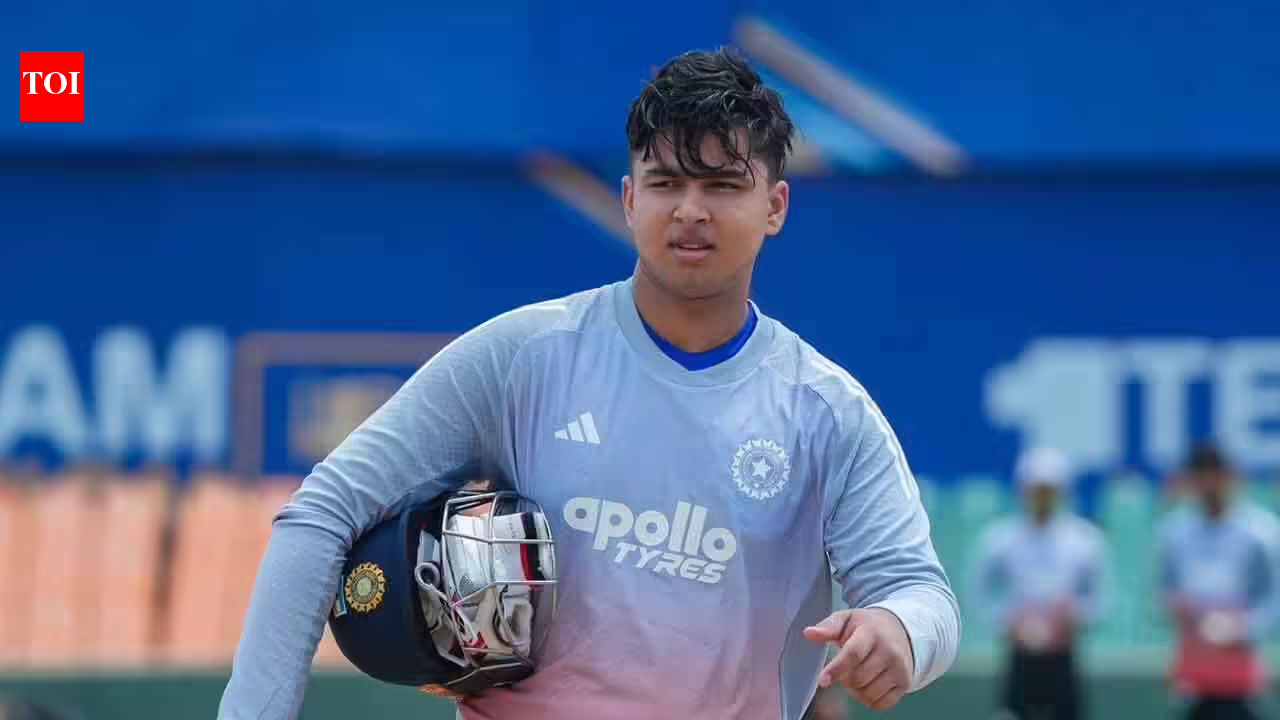
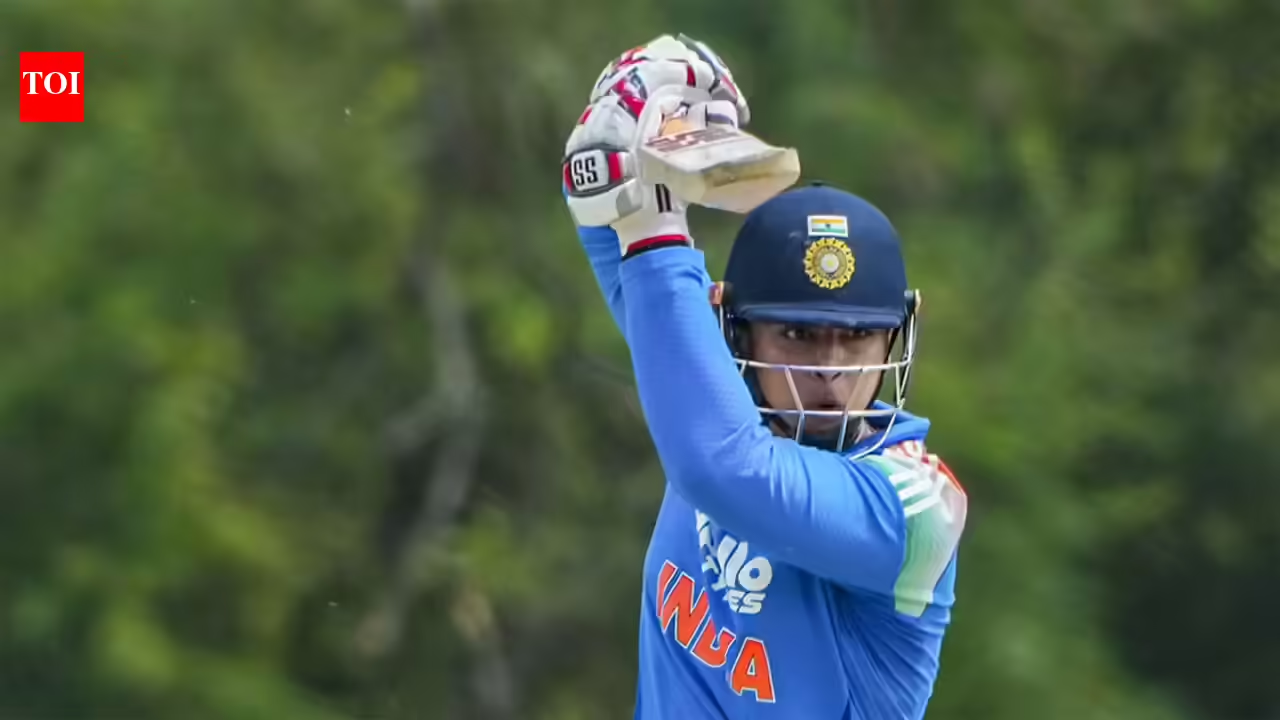
NEW DELHI: All eyes will be on 15-year-old Vaibhav Sooryavanshi when India take on Ireland in the first T20I of the two-match series in Belfast on Friday.The teenage batting sensation has become one of the biggest talking points in world cricket, with fans eagerly waiting to see if he will make his India debut. If he gets a game, Sooryavanshi will create history by becoming the youngest player to represent India in men’s international cricket.
Sooryavanshi’s remarkable rise
Sooryavanshi earned his maiden senior call-up after an impressive IPL 2026 season. Playing for Rajasthan Royals, he scored 776 runs in 16 innings at a staggering strike rate of 237. He also smashed 72 sixes, setting a new record for the most sixes in a single IPL season.The youngster carried his form into the India A tri-series in Sri Lanka. In the one-day final against Sri Lanka A in Dambulla, he blasted 94 off just 29 balls, once again showing why he is regarded as one of the brightest young talents in the game.
A chance to break Sachin Tendulkar ‘s record
At 15 years and 71 days, Sooryavanshi became the youngest player ever to be selected in India’s senior men’s squad, breaking Sachin Tendulkar’s 36-year-old record.Tendulkar made his international debut in 1989 against Pakistan at the age of 16 years and 205 days. If Sooryavanshi is included in the playing XI against Ireland, he will surpass the batting legend to become India’s youngest men’s international cricketer.
‘Words cannot explain it’: Sooryavanshi
Speaking after receiving his maiden India call-up, Sooryavanshi described wearing the India jersey as a dream come true.“Words cannot explain it. The reason I picked up the bat from day one and went to the ground for practice: that dream is fulfilled now. The biggest step in that journey was completed today. I truly cannot put this feeling into words,” he said in a video shared by the BCCI.The teenager admitted he was overwhelmed when he first saw the India jersey.“I felt like a dream when I saw that T-shirt; I couldn’t stop smiling. Sometimes things happen that you never imagined could happen. When it finally does, you don’t know how to react. That was exactly how I felt,” he added.
Will the wait end in Belfast?
Whether he makes his debut on Friday or later in the series, excitement around Sooryavanshi continues to grow. For now, the biggest question ahead of India’s clash against Ireland remains the same: Will the 15-year-old get his first India cap?
India vs Ireland T20Is: Squads
India: Shreyas Iyer (captain), Tilak Varma (vice-captain), Ravi Bishnoi, Abhishek Sharma, Suryansh Shedge, Prasidh Krishna, Sanju Samson, Axar Patel, Harshit Rana, Ishan Kishan, Washington Sundar, Arshdeep Singh, Shivam Dube, Prince Yadav, Vaibhav Sooryavanshi.Ireland: Lorcan Tucker (captain), Ross Adair, Ben Calitz, Gareth Delany, George Dockrell, Stephen Doheny, Matthew Humphreys, Gavin Hoey, Matthew Hollard, Liam McCarthy, Jai Moondra, Harry Tector, Tim Tector, Reuben Wilson.