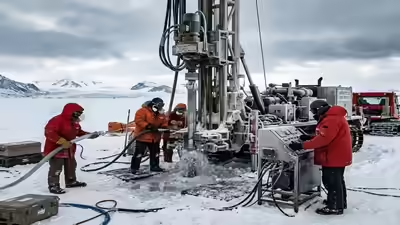
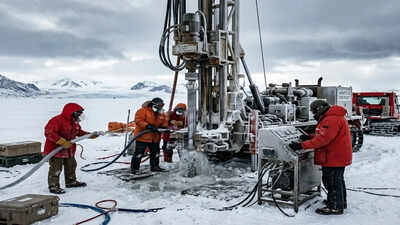
Scientists have obtained the deepest sediment core ever recovered from under the Antarctic ice, providing insight into climate changes on Earth millions of years ago. The sediment core, discovered beneath Crary Ice Rise, is about 748 feet deep and covers a period spanning almost 23 million years.According to the researchers at the Sensitivity of the West Antarctic Ice Sheet to 2° Celsius of Warming (SWAIS2C) project, the new record holder is a core drilled through 1,716 feet of ice in one of the remotest spots on Earth. The scientists believe that the core contains important information about the evolution of our planet’s climate and its changes in temperatures higher than those in modern timesDrilling in extreme conditionsIt is worth mentioning that the drilling was carried out at an ice dome called Carry Ice Rise, far from any stations, more than 700 kilometres away. That created significant logistical challenges as teams had to provide the equipment in clean conditions for drilling.Nevertheless, they managed to do it. The drill penetrated several ice layers to access the sediment below. It is essential not to contaminate ancient rocks during the process.This accomplishment marks a new standard for the study of the poles, according to the experts. At the same time, it paves the way for further drilling activities underneath ice sheets. Hence, careful planning and engineering were necessary to ensure the samples would remain intact.What the core holdsAccording to preliminary research, there are layers of mud, sand, and gravel within the core sample. They have developed throughout the course of millions of years and represent different environmental changes at various times in history. The age of the core was estimated by using fossilised algae.Nature reports that based on the findings of one study, the core holds information about the climate history dating back to around 23 million years ago. This record ranks among the oldest ones obtained underneath any of the ice sheets.It is worth noting that the diversity of sediments is crucial for the research. Mud shows calmer times, whereas gravel indicates the presence of ice flow.
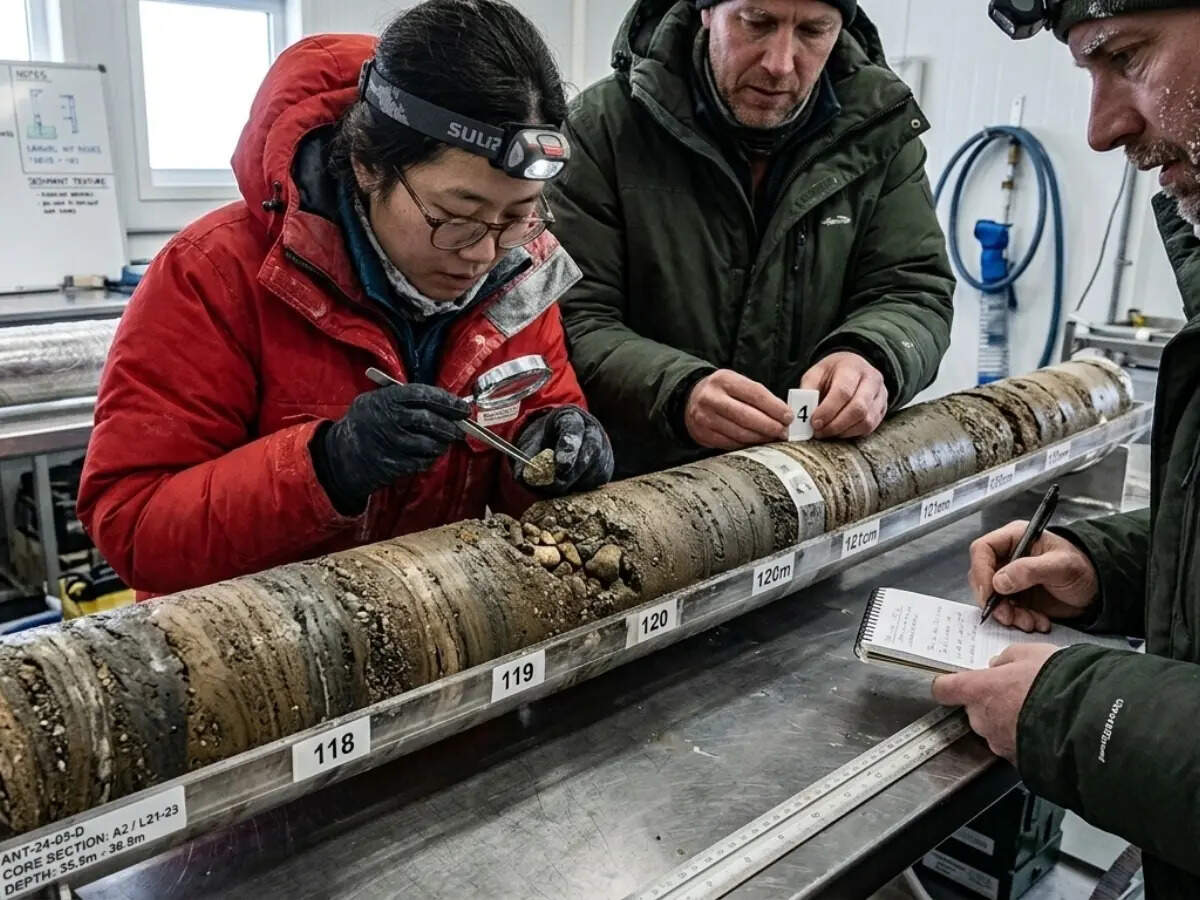
A breakthrough beneath the ice is changing what we know about climate. Image credit – Gemini
What does the drilling project explain?This discovery was made in connection with the research project called Sensitivity of the West Antarctic Ice Sheet to 2°C of Warming. This study aims to determine how the ice sheet responded to changes in temperature in the past.Scientists expected that the results obtained from such an investigation would contribute to making more accurate forecasts concerning the effects of climate change in the future. It was reported by the University of Kiel that the SWAIS2C project unites climatologists’ efforts to study the sensitivity of the ice sheet using climate models and geological records of warming beyond 2°C.The West Antarctic Ice Sheet is a highly sensitive area since it contains a huge amount of ice that might cause sea level rise in case of melting.Significance of the studySediment cores allow for a better understanding of how Antarctica reacted to increased temperatures in the past. Now, it will be possible to compare these events with the current tendencies in climatic changes.According to the report by Polar Journal, these results would help develop better models of sea level rise. This is particularly relevant since the latest data reveal that ice melting is occurring at an increasing rate in West Antarctica.The reason for this lies in the fact that scientists stress the significance of learning from past instances of global warming. Climate scientists claim that the geologic record tells us something about what will happen in the future. In this way, uncertainties become easier to foresee.Global science partnershipScientists who participated in this venture came from various countries, including the United States, Germany, Italy, and New Zealand. The collaboration shows how crucial the study of Antarctica is on a global scale.Past projects provided data regarding the climate spanning tens of thousands of years. Now, the newly acquired core expands the timeline to millions of years. In this way, it becomes possible to examine the trends and connections between different stages of Earth’s climatic history.What’s next?The core is now being studied extensively in the lab. Scientists will analyse chemical fingerprints, fossils, and sediment structures to piece together ancient environments. This information promises to enhance climate modelling and aid decision-making. As the planet continues to heat up, better predictions become increasingly critical for coastal areas. The find represents a significant breakthrough in climate science. By drilling deep into Antarctica’s ice, researchers are uncovering secrets that may influence how humanity prepares for the future.