If you’ve got a Japanese maple in your yard or on your patio, you already know the appeal. That deep crimson foliage with a hint of purple hits differently; it’s the kind of tree that makes your outdoor space look intentional, even if you haven’t done much else with it. Japanese maple (Acer palmatum) is one of the best plants to have in a smaller yard or on an apartment balcony because it is compact, slow-growing, and surprisingly low-maintenance.However, here’s the thing: May is kind of a make-or-break month for these trees. As temperatures start to creep into summer, a few targeted care steps can be the difference between a tree that looks stunning all season and one that just survives. Proper care in the spring will help it burst into vibrant foliage and keep it looking beautiful all season long, whether your tree is a young sapling or a full-grown tree.Here’s what you need to do.Don’t forget the spring trimSpring is the best time to perform a light, strategic prune of your Japanese maple, and the keyword there is light. You’re not trying to do a dramatic overhaul. It’s more like tidying up, cutting off dead or weak branches that are in the way of the air and clearing anything that’s crossing or rubbing on other branches.According to the study, The Research Foundation to Tree Pruning: A Review of the Literature, pruning is one of the most important things you can do for a tree’s long-term health, but it’s also one of the easiest ways to do damage if you don’t do it right. The research shows that reducing the size of the wound and avoiding too many cuts at any one time protects the tree’s ability to heal and seal properly.That’s why the pros are steadfast on one point: don’t do any heavy shaping until late spring. If you prune heavily in early spring, it can put a lot of stress on the tree as it tries to push out new growth. A few well-placed cuts? Great. Going to town with the shears in March? Skip it.
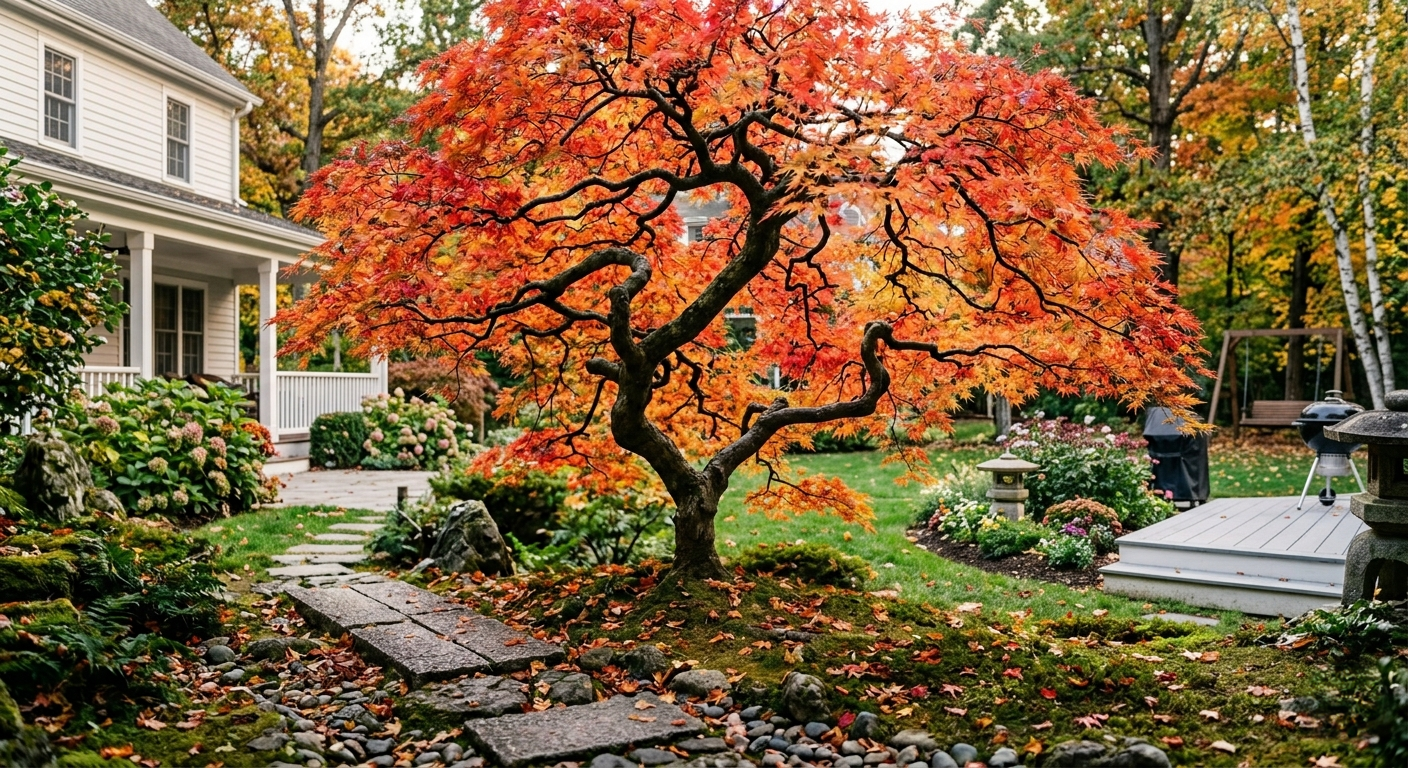
Japanese maples thrive with just a few targeted care steps each spring, and the results speak for themselves. Image Credits: Google Gemini
Mulch like you mean itThis one tends to get overlooked, but a fresh ring of mulch around your Japanese maple is really one of the highest-impact things you can do for it. It retains moisture, keeps roots cool when temperatures rise and keeps weeds from crowding in at the base.A meta-analysis published in Arboriculture & Urban Forestry found that organic mulch materials generally have beneficial effects on shoot growth, root growth, and overall tree health, including increased soil moisture retention and improved root development over time.A good rule of thumb is to lay down a two to three-inch layer around the base of the tree. Three of the best materials to use are shredded bark, wood chips, and pine needles. One important thing to remember: don’t pile the mulch right up against the trunk. That mulch volcano look you sometimes see is actually a bad thing, causing rot and pest problems. Instead, keep it a few inches from the bark and spread it out in a wide circle.Organic mulch will break down over time, so check it every few weeks and add more as needed to maintain that depth through summer.Water smarter, not just moreSpring weather in most of the US can be unpredictable. You can go from a week of rain to a dry spell without any warning. Japanese maples like moist, not soggy, soil, and that balance really counts. Too much water is just as bad as too little. Overwater and you risk root rot; underwater and the tree will show stress in scorched, wilting leaves.The easiest and lowest-tech way to check for moisture is to stick your finger one to two inches into the soil at the tree’s base. If dry, water thoroughly. If it is still wet, wait. Water once or twice a week, depending on rainfall, preferably in the morning. This allows roots to absorb moisture before the afternoon heat kicks in and surface evaporation ramps up.It really is that simpleYou don’t need a large yard or a green thumb to grow a healthy Japanese maple. These trees are forgiving, but a little focused attention in May, a light prune, fresh mulch and smart watering, sets the stage for months of that dramatic, jewel-toned foliage that made you want one in the first place.