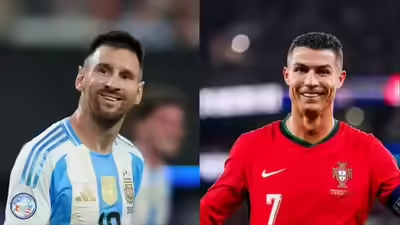
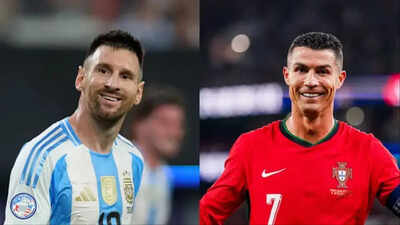
Lionel Messi and Cristiano Ronaldo prepare to hand over football’s greatest rivalry before the historic 2026 FIFA World Cup (Getty Images)
Less than a month remains before the 2026 FIFA World Cup kicks off across the United States, Canada, and Mexico, and the build-up feels different this time. Lionel Messi, 38, and Cristiano Ronaldo, 41, are almost certainly making their final appearances on the game’s biggest stage. Simultaneously, a new wave of players, many of them born during the peak of the Messi-Ronaldo era, are arriving ready to carry their nations. This tournament sits at a genuine crossroads.
Is this the last World Cup for Messi and Ronaldo?
Messi lifted the trophy in Qatar in 2022, arguably the most complete ending a footballer could write for himself. Ronaldo, despite five Ballon d’Or awards and a career stacked with records, still hasn’t held that trophy. Both men arrive in 2026 knowing this is almost certainly their final opportunity.
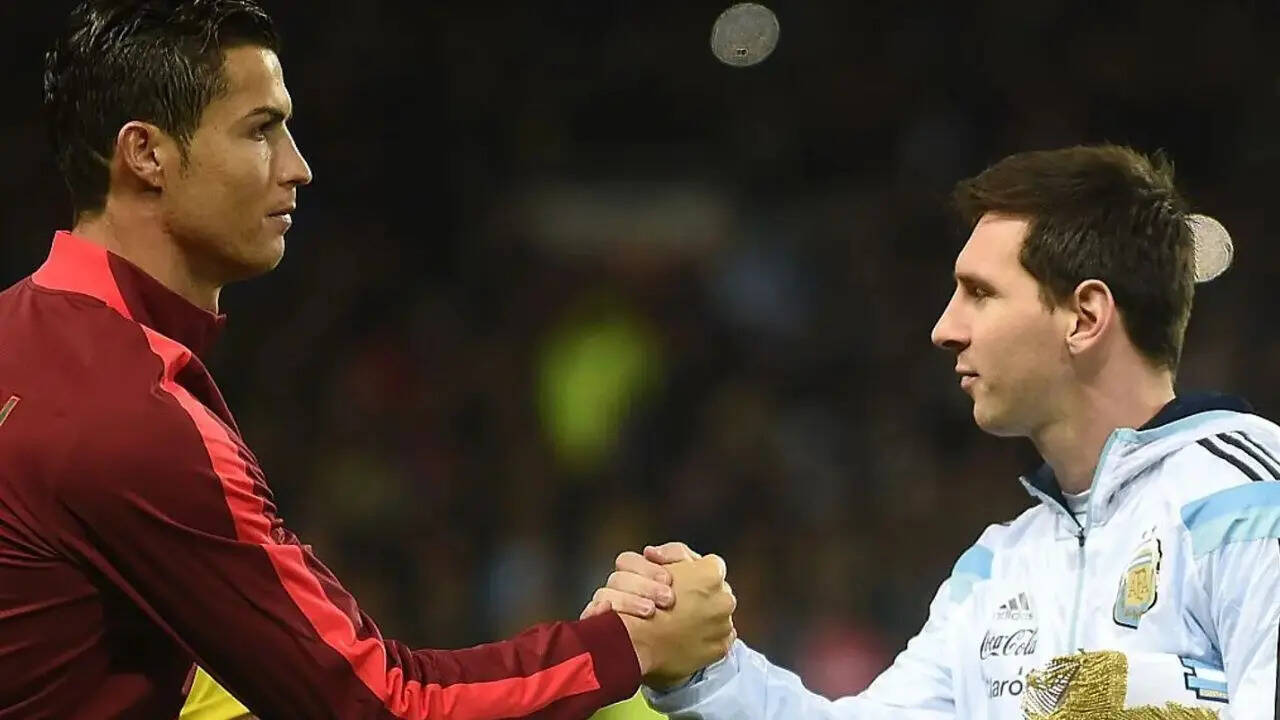
Cristiano Ronaldo (left) and Lionel Messi could meet at the 2026 World Cup (Getty Images)
Their rivalry shaped how an entire generation understood football. Fans didn’t just support clubs or countries during this period, they anchored their football identity to one of these two names. That debate, exhausting as it often became, kept the sport endlessly alive in living rooms, offices, and schoolyards for two decades.Now, Spain’s Lamine Yamal, just 18, plays with the kind of freedom that comes from having nothing to prove yet. Brazil’s Endrick carries the expectation of a nation that hasn’t won a World Cup since 2002. Jude Bellingham, Kylian Mbappé, and Jamal Musiala are no longer future names on a watchlist. They are the present, and this tournament will define how seriously the world takes them.
Why does the World Cup still feel like nothing else in Football?
The tournament has always produced moments that live beyond the sport itself. Maradona against England in 1986. Zidane orchestrating France to the title in 1998. Iniesta’s extra-time winner in 2010. Götze’s chest control and finish in 2014. Martínez’s saves in 2022, before Messi finally raised the trophy. These aren’t just football memories. They are cultural reference points.For the traditional giants, Argentina, Brazil, England, France, and Spain, every World Cup is about defending legacy. For smaller nations, it is the rare chance to matter on the global stage, even briefly.Football today moves faster, costs more, and gets dissected instantly. Every error becomes content within seconds. Players arrive as global brands before they have won anything meaningful. Yet despite all of that commercial noise, the World Cup somehow still cuts through.It remains the one competition where a single match can shift the entire conversation. Where an unknown player from an unfancied nation can become the story everyone is talking about the next morning.That hasn’t changed. And it probably won’t.