End of an era! Riyad Mahrez retires from international football after Algeria’s FIFA World Cup exit | Football News
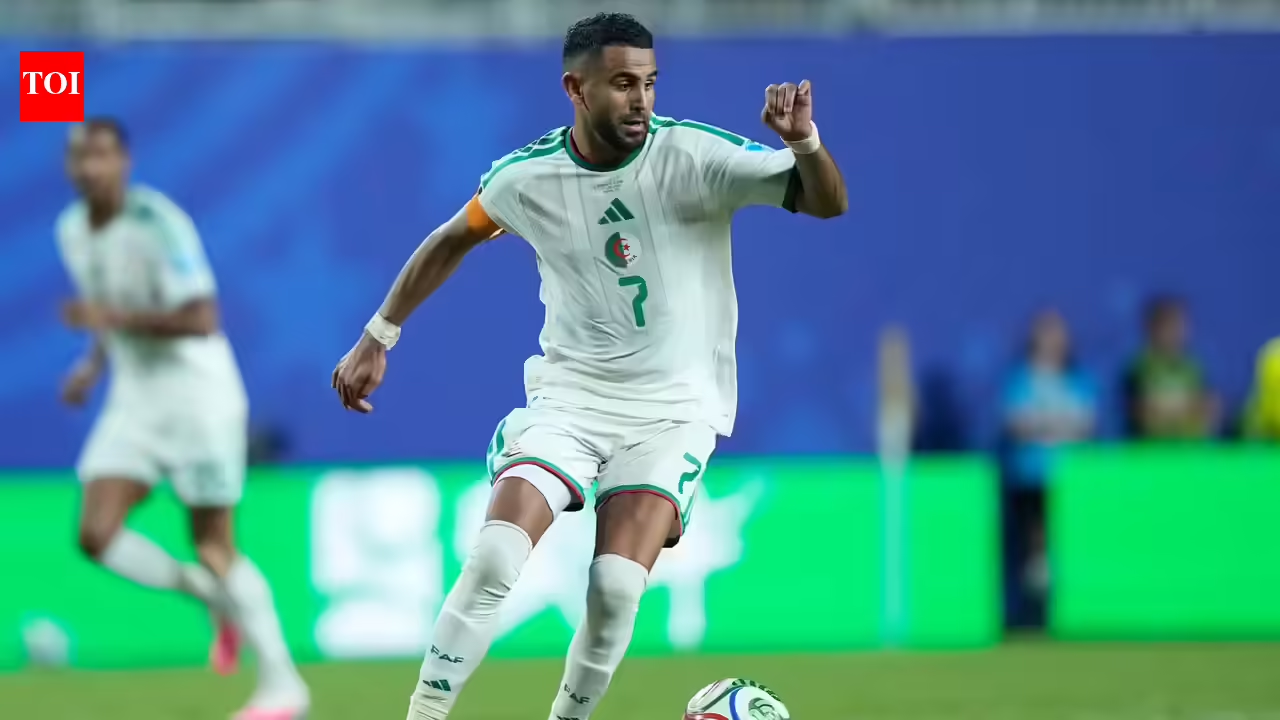
Algeria captain Riyad Mahrez has announced his retirement from international football following his country’s elimination from the FIFA World Cup 2026, bringing the curtain down on one of the finest international careers in Algerian football history.The 35-year-old confirmed his decision after Algeria’s 2-0 defeat to Switzerland in the Round of 32 on Thursday, ending a national team journey that spanned 119 appearances and included the country’s memorable Africa Cup of Nations triumph in 2019. “This was my final match for the national team,” Mahrez told beIN Sports after the defeat, with his comments later shared by football media platform 433.Mahrez bowed out with an impressive international record of 40 goals and 45 assists, having established himself as one of Africa’s greatest players of his generation.
A fitting end to a glittering international career
Mahrez’s retirement marks the end of an era for Algerian football.The former African Footballer of the Year was instrumental in Algeria’s 2019 Africa Cup of Nations title-winning campaign, helping the Desert Foxes lift their second continental crown and cementing his legacy as one of the nation’s all-time greats.Known for his silky dribbling, creativity and eye for goal, Mahrez became one of the most influential players to represent Algeria on the international stage while also enjoying a trophy-laden club career.His final appearance came at the FIFA World Cup, where Algeria returned to the global stage for the first time since 2014 but were unable to extend their campaign beyond the Round of 32.
Switzerland end Algeria’s World Cup dream
Switzerland produced a composed performance to secure a 2-0 victory and book their place in the Round of 16.Breel Embolo opened the scoring in the 10th minute after finishing off an excellent move created by the impressive Johan Manzambi, whose driving run and precise cross unlocked the Algerian defence.The Swiss doubled their advantage less than a minute into the second half when Dan Ndoye struck from outside the penalty area after a loose clearance fell kindly into his path.Despite Mahrez’s efforts to inspire a comeback, Algeria struggled to break down Switzerland’s disciplined defence, while Fabian Rieder narrowly missed adding a third goal late in the contest.The victory was historic for Switzerland, marking their first World Cup knockout-stage win since 1938. They have also won three consecutive World Cup matches for the first time and will now face either Colombia or Ghana in Vancouver for a place in the quarterfinals.