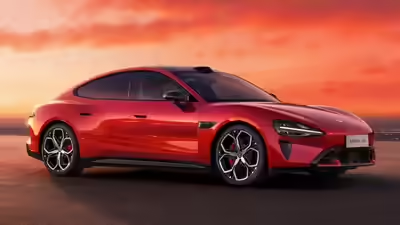

Chinese tech giant Xiaomi has debuted the updated Xiaomi SU7 sedan. The new version brings notable improvements in performance, range and in-cabin tech. Here’s a quick look at some of the key details.
Updated Xiaomi SU7 electric car: Key details
The electric sedan is offered in three variants: Standard, Pro and Max. One of the biggest highlights is performance. The updated SU7 is powered by Xiaomi’s HyperEngine V6s Plus motor across the range. It can sprint from 0 to 100 kmph in just 3.08 seconds, with a claimed top speed of 265 kmph. That puts it right up there with some serious performance EVs globally.Range is another key talking point. The SU7 now offers a claimed range of up to 902 km (CLTC cycle) on the Pro variant. The Standard model delivers up to 720 km, while the Max variant offers around 835 km. Xiaomi has also improved efficiency, claiming energy consumption as low as 11.7 kWh per 100 km.As for charging, the company claims that the car can add up to 670 km of range in just 15 minutes, while a 10 to 80 percent charge can be done in about 12 minutes under ideal conditions.
In terms of design, the overall silhouette remains similar, but there are subtle updates. The new model gets revised styling elements, a refreshed grille design and more colour options. Inside, the cabin has seen a bigger overhaul. It now gets more soft-touch materials and boasts of features like ventilated and heated seats, a redesigned centre console, and extended ambient lighting. On the tech front, the SU7 gets a heavily upgraded infotainment and connected system, powered by Xiaomi’s ecosystem. It includes voice commands, multi-screen integration and improved AI-based features. The car also comes with advanced driver assistance systems, supported by LiDAR, cameras and radar-based sensors.