


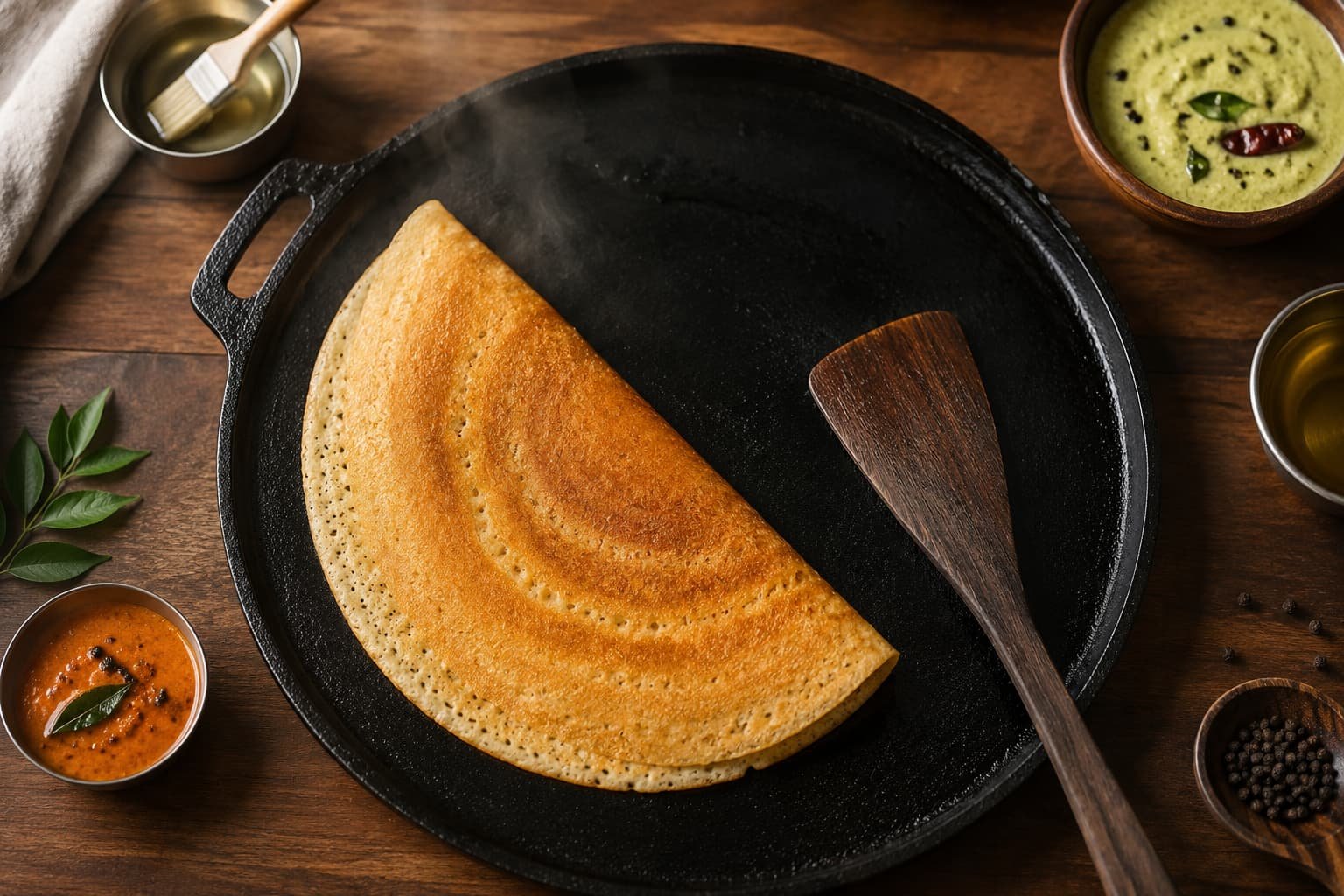

- 🌿Toxin free cookware: Made from 100% Natural cast iron cookware, this cast iron Tawa is a 100% Healthy cookware, food sa…
- 💊Enriches food with iron: Adds iron content to your food that helps fight iron deficiency
- 😋Make tastiest Dosa with The Indus Valley’s cast iron tawa. Feel the difference in taste of Dosa’s made in Cast iron taw…
Rating: 4.5/5 ⭐
After a month of daily use — dosas most mornings, chapathis in the evening, and the occasional grilled sandwich — I feel qualified to give this tawa a proper, warts-and-all review.
First Impressions
The tawa arrives well-packed, and the first thing you notice is the finish. “Super smooth” isn’t just marketing — this is genuinely one of the smoother cast iron surfaces I’ve handled, closer to a soapstone tawa than the rough, pitted cast iron you might remember from an older relative’s kitchen. At 2.8kg, it has satisfying heft without being unwieldy, and the 27.6cm/10.8-inch diameter is the sweet spot for a full-size dosa without hogging the whole burner.
The included wooden spatula is a thoughtful touch — nothing fancy, but it saves you a trip to the store and won’t scratch the surface the way a metal one might.
Seasoning: Do Not Skip This Step
If you’re new to cast iron, manage your expectations here. This tawa is not pre-seasoned to a nonstick finish out of the box — it needs proper seasoning before it performs. I followed the process on the packaging (oil rub, gentle heat, wipe, repeat a few times) and it took about three rounds of seasoning before dosas started sliding off effortlessly. This isn’t a flaw specific to this product — it’s simply how raw cast iron works — but it does mean this isn’t a same-day, use-out-of-the-box purchase.
Cooking Performance
This is where the tawa earns its keep. Heat distribution is excellent — no hot spots, no scorched patches while the edges stay cold, which I’ve struggled with on cheaper nonstick tawas. Dosas cook up genuinely crisp and lacy at the edges with a nice deep golden color, and there’s a real, noticeable difference in flavor compared to a Teflon-coated pan — slightly nuttier, more “restaurant-style.” Chapathis puff up beautifully and develop those characteristic charred spots evenly.
It also holds heat well after being taken off the flame, which is handy if you’re cooking for a crowd and want the last few rotis to stay warm-ish while plating.
Being induction-compatible is a big plus if your kitchen has moved away from gas — it heats evenly there too, though it takes a touch longer to come up to temperature than on an open flame.
Maintenance — The Real Talk
This is the part that trips people up coming from nonstick cookware, so I’ll be direct:
- No soaking. Wash it right after use with a mild soap and a soft scrub, dry it immediately and completely (I towel-dry, then set it on a warm burner for 30 seconds to be sure), and rub in a thin layer of oil before storing.
- Expect rust if you get lazy. I left it damp overnight once in the first week and woke up to faint rust spots. A quick scrub and re-oil fixed it, but it was a useful reminder that this pan wants a little ritual, not a rinse-and-forget approach.
- It gets better with time, not worse. Each use builds on the seasoning, so a well-loved tawa two months in genuinely outperforms a fresh one.
Health Angle
The toxin-free, coating-free claim is the main reason many buy cast iron in the first place, and it holds up — there’s no flaking coating to worry about ingesting, unlike lower-end nonstick pans after a year or two. Whether the “iron-enrichment” benefit is significant enough to notice health-wise is hard to verify personally, but it’s a reasonable, well-documented property of cooking in cast iron, particularly with acidic foods.
Who This Is For
- Great fit: anyone willing to spend five extra minutes on care in exchange for a pan that will genuinely outlast a decade of nonstick replacements, and who wants that authentic tawa-cooked taste.
- Not a great fit: anyone wanting true “wash and walk away” convenience, or a nonstick result from day one with zero seasoning effort.
Value for Money
Considering a decent nonstick tawa needs replacing every 1–2 years once the coating degrades, this cast iron tawa’s one-time cost pays for itself quickly. Buy this once, season it properly, and it’ll likely outlast several nonstick replacements — arguably becoming an heirloom piece rather than a consumable.
Bottom Line
Not a plug-and-play pan, but a genuinely excellent one once you put in the initial seasoning effort and commit to the (minimal) upkeep routine. For anyone chasing authentic, restaurant-style dosas and rotis at home, this tawa delivers — and delivers for years, not seasons.
Would I recommend it? Yes — with the honest caveat that you should go in prepared to season it properly and dry it religiously after every wash.
