


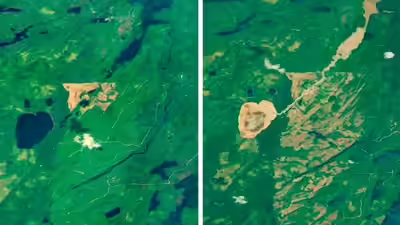
The secluded boreal forest in southwest Quebec has secrets that are revealed when you study it with a keen eye or look at it from a distance of thousands of miles. Within this vast expanse, the remarkable, one-square-mile body of water dubbed Lake Rouge once caught the attention of satellite photographers. It was surrounded by two pools that were smaller and symmetrical. The trio created an astonishing, completely natural geometrical occurrence: an open-mouthed, wide-eyed Emoji looking stunned at the night sky.However, by the end of May 2025, this face had faded into the air. People belonging to the Cree First Nation of Waswanipi, who had been fishing and hunting in these areas over the years, came across an odd and disturbing route. A rural logging trail was mysteriously covered in dense mud and dotted with fish strands. As they walked forward, they found only a barren, open depression. The entire lake had been emptied overnight, leaving an old lake bed that was baking in the sunlight.Satellite photos taken by Landsat 9 confirmed the sudden change. A mid-2024 photo depicted the complete, beautiful form of Lake Rouge intact, but data from the next spring revealed the only dry mark left in the landscape. A catastrophic outburst flood had punctured the eastern bank, sending millions of gallons of sediment-heavy water carving through smaller streams and pouring into the massive, twenty-nine-square-mile Doda Lake, turning its waters a murky brown.Nature breaks the rules of nature; it is a violation.Floods that outburst are usually restricted to glacial zones in which ice walls keep back huge volumes of melting water until they break. These are also observed when dams built by man fail under the pressure of structural stress. The sight of a normal freshwater lake exploding into its banks in the middle of a landscape that is not glacial is not seen. It’s so uncommon that forest hydrologists and geologists are scrambling to understand the swift chain reaction that caused the explosion.The geology of Quebec had a subtle but significant impact on the current crises. Many thousands of years ago, the entire area was underneath enormous glaciers. As it’s a new landscape, it is undergoing a change and changing fast in the face of pressure. In the event that an extremely massive winter snowpack began melting rapidly during 2025’s springtime and pushed the regional water levels to historical highs, it would place a massive burden on the natural earth barrier.Just water made it impossible to make Lake Rouge. This disaster marked the final point for a severely damaged ecosystem. The intensity of the wildfires ravaged the boreal forest surrounding it in 2019, and then again in the 2023 Canadian fire season. The blazes smoulder in the topsoil while removing vital vegetation, which acts like a natural sponge, leaving behind a spongy ground that does not absorb water well and can cause enormous surface runoff.

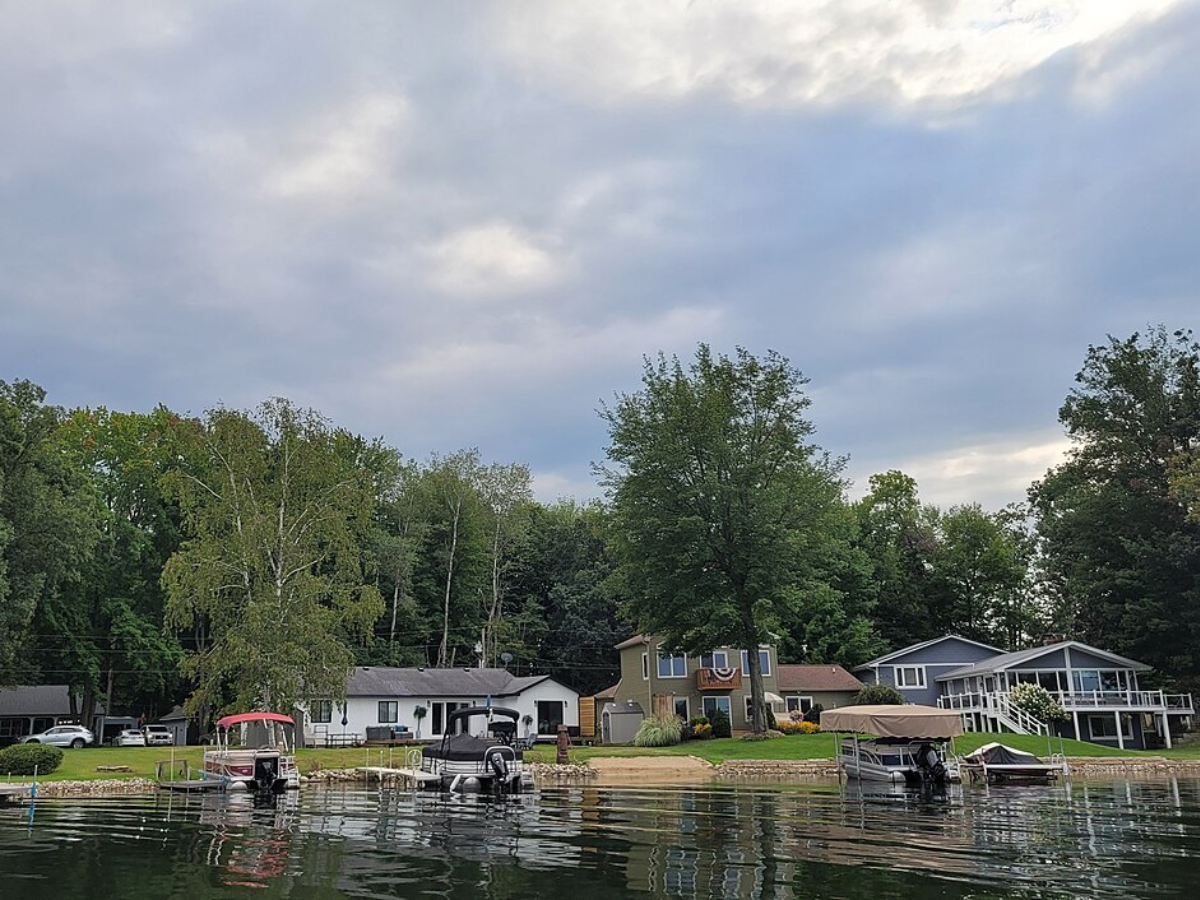
This rare event, exacerbated by rapid snowmelt and past wildfires, highlights the fragility of postglacial landscapes under combined climate and human pressures. Image Credit: Wikimedia Commons
The cost of the disturbance of forestsHuman activity added the last important pressure on an already stretched watershed. The decades of commercial logging and clear-cutting within the basin profoundly affected the flow of water throughout the landscape. As the mature trees’ canopy is gone, snowmelt speeds up significantly in spring sunlight. With no forest buffering the process, a large quantity of water flows into Lake Rouge much faster than its fragile postglacial banks can handle.The complicated relationship between the forest cover practices for harvesting, as well as soil stability, is well studied by environmental scientists. Studies released in Forest Ecology and Management expose how significant disturbances like clear-cutting or industrial use of land can alter the local balance of ecological systems and have a significant impact on the soil’s quality as well as retention of water in forest catchments. When industrial pressures clash with climate-related events, such as intense forest fires and extreme winters, the natural structure of the wildlands simply gives way.In the case of Waswanipi Cree, the loss will be more than a genuine scientific issue or a missing spacecraft interest. This is a massive disturbance to their culture and sustainable way of living, and ruins a place that was used for fishing and trapping over several generations. The lengthening of the wildfire season and the extraction of resources continue to change the ecology of northern ecosystems. The sudden demise of Lake Rouge stands as a clear warning in the dirt, illustrating what happens when an ecosystem is stretched beyond its limit.