


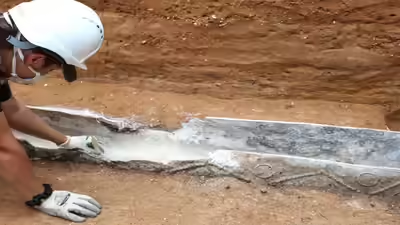
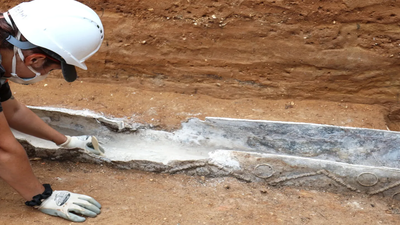
Colchester archaeologists unearthed a 1,700-year-old lead coffin, revealing a wealthy Roman woman’s life. Image Credit: Colchester Archaeological Trust
Archaeologists in Colchester have found a glimpse into an ancient world of luxury and a personal tragedy. Archaeologists have been shocked by the discovery of an ancient lead coffin containing a woman buried nearly 1,700 years ago. It’s not just a bunch of bones. This carefully staged tableau is about status, love, and exotic locations of the Roman Empire.Adam Wightman, the Director of Archaeology for the Colchester Archaeological Trust, described this find as the most interesting burial the town had seen in many years. This woman was in her 30s and 40s. She lived at a time of great imperial activity, when Britain, though distant, still had a vibrant culture. The burial of the woman was a big event, with a lead coffin decorated and grave goods that suggested she was an important figure.Imperial connections and exotic fragrancesThis discovery is truly amazing because it contains substances that travelled thousands of miles before reaching the British shores. The frankincense was found by archaeologists in the remains of deceased people. Frankincense was made from sap of Boswellia trees and was considered a luxury. The presence of Frankincense suggests that it was traded across Africa, India, and the Middle East.The use of rare resins in burials had a deeper meaning than merely displaying wealth. It was rooted deeply in the religious and medical beliefs at the time. The research published in Oxford Academic shows that such elaborate funerary treatment was often used to show the social identity of the elites and their “staged nature” in provincial burials. These materials show how, even on the fringes of the Roman empire, elites maintained an international lifestyle.The use of gypsum adds to the mystery. Before the coffin’s seal was applied, it appears that the woman’s corpse had been coated in gypsum paste. This technique was used in Roman Britain to either preserve the corpse or to leave a physical imprint of the dead. The gypsum can sometimes harden and leave behind a three-dimensional negative of the deceased, such as the famous York examples, where the outline was preserved perfectly.

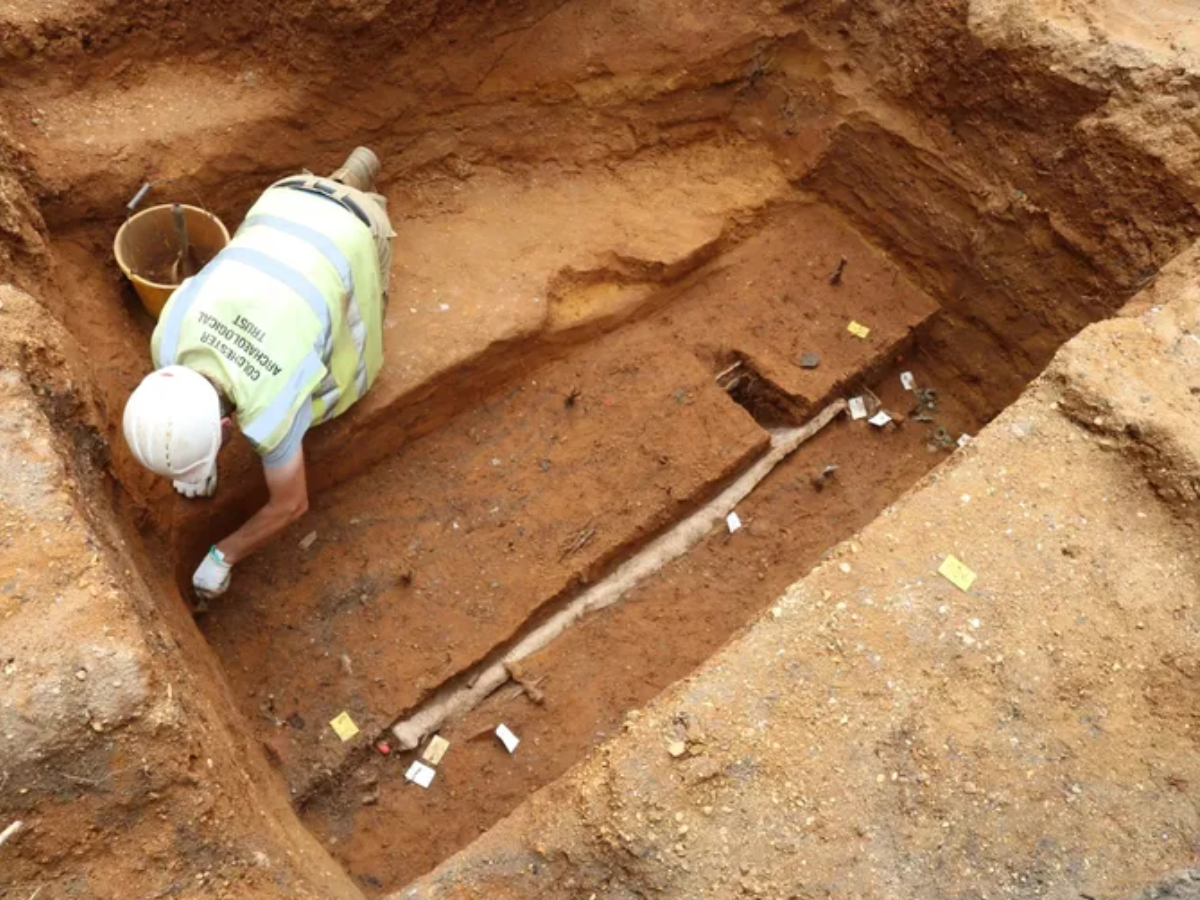
The burial, featuring exotic frankincense and valuable grave goods like jet hairpins and glass flasks, signifies her high status and international connections. Image Credit: Colchester Archaeological Trust
The final goodbye of a communityTetra Tech Consulting Limited led the excavation and revealed more than resin or plaster. The coffin was filled with jet hairpins as well as rare glass flasks that were highly valuable items at the time. Robert Masefield noted the size of “the rich group of grave items” as a sign that she was loved by her family and community.The grave is a stark contrast to other, simpler burials from the time. In the article Bears and Coins: The Iconography for Protection in Late Roman Infant Burying, published in Britannia, the author explores the role of material culture, such as the jet pins in this grave, in serving both as a protection charm and status marker (Crummy 2010). The study was primarily focused on children. However, the principle remains: what we give to the dead is a reflection of our values and fears.The former hospital site is being developed for residential purposes. The legacy of the “elite Roman women” will still be available to the public. The lead coffin, along with its valuable contents, will be on display at Colchester’s Roman Circus Visitor Centre starting May 16, 2026. The lead coffin and its precious contents will be displayed at Colchester’s Roman Circus Visitor Centre starting May 16, 2026.