


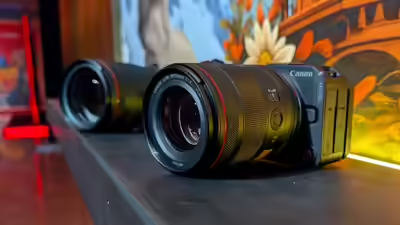
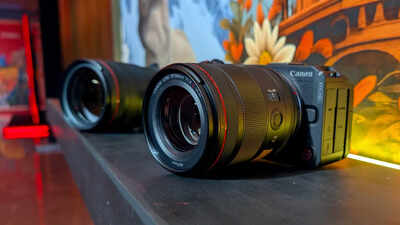
The global imaging landscape is undergoing a radical shift powered by computational photography. The built-in tools that the smartphone makers are incorporating have divided consumers. While one half is of the view that AI in cameras is ‘killing’ the creativity, the other half says AI has helped mitigate problems on-the-go and fast-tracked the whole experience. For example, computational photography, powered by aggressive algorithms, can artificially brighten night skies, completely replace a cloudy background with a vivid sunset, and use generative networks to stitch texture onto the surface of the moon where a tiny sensor could only see a blur. This has altered consumer expectations, raising a critical question for the traditional imaging industry: What is the role of a dedicated, professional camera in an era where software can simulate reality with a single tap?At such time, digital imaging pioneer Canon has taken a distinct stance. Rather than treating artificial intelligence as a magic wand to synthesize imagery out of thin air, the company is embedding the technology deep within its hardware to serve a entirely different purpose: preserving human creativity. This philosophy took centre stage recently, when the Canon executives gathered in India to unveil their latest hardware ecosystem—the video-focused EOS R6V full-frame camera and the innovative RF 20-50mm F4L IS USM Power Zoom lens.
Part 1: The creator boom in India and the launch of the EOS R6V
The modern creator economy has evolved past simple, single-platform uploads. Independent filmmakers, wedding documentarians and digital content creators are now required to operate as full-scale production houses. Moreover, a single shoot must frequently be repurposed across multiple platforms. To address these compounding demands, Canon introduced the EOS R6V, a full-frame mirrorless body heavily optimised for high-intensity hybrid workflows. Built upon the imaging foundation of the EOS R6 Mark III and the cinema-grade EOS C50, the R6V introduces several structural and functional modifications specifically engineered for the modern video landscape.

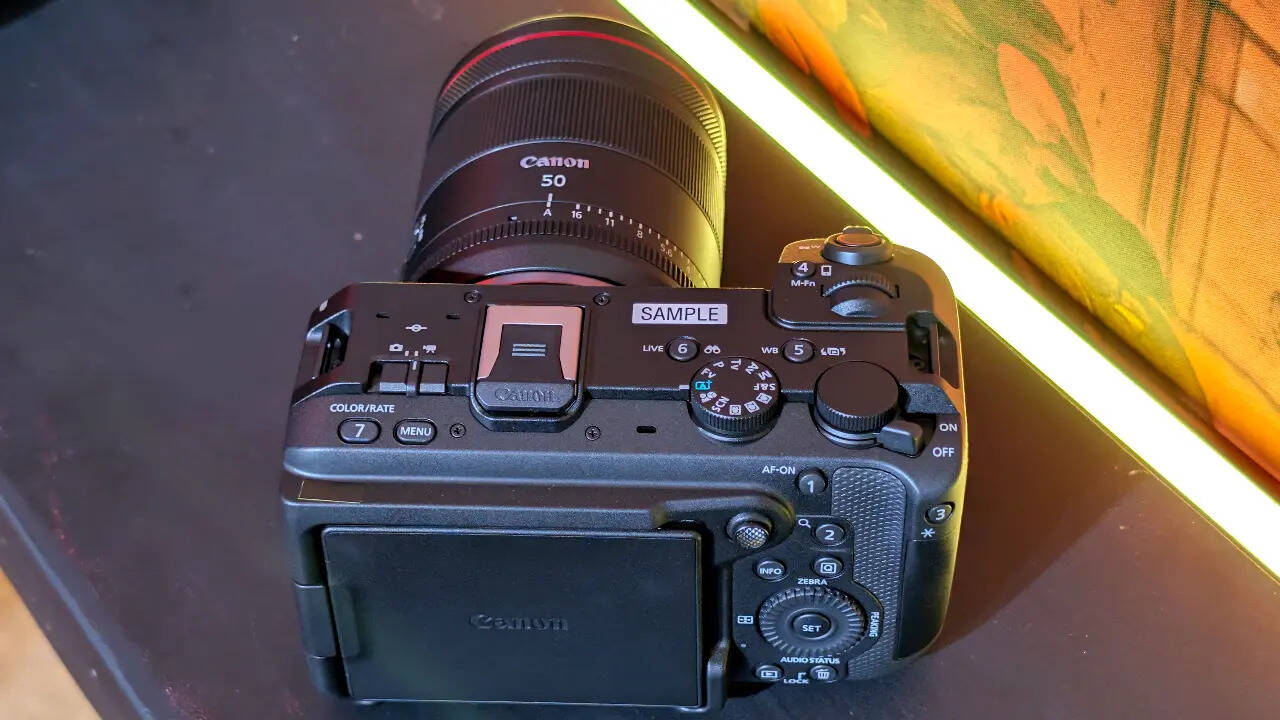
One of the key highlights is the native vertical support and the camera features a dedicated vertical tripod socket integrated into the base, enabling operators to mount the camera securely in portrait orientation without relying on cumbersome L-brackets or third-party rigging cages that can unbalance a tripod head or motorized gimbal.To prevent the overheating shutdown during critical takes, the EOS R6V features an internal cooling fan system, the thermal management system allows the camera to record continuously in its demanding 7K Open Gate mode for approximately three times longer than a standard EOS R6 Mark III body.At the core of the EOS R6V’s versatility is its 32.5MP full-frame CMOS sensor, which supports 7K Open Gate RAW and MP4 recording. Traditional video recording utilizes a standard 16:9 crop of the sensor, discarding valuable visual data at the top and bottom of the frame. Open Gate recording, by contrast, captures data across the entire physical surface of the full-frame sensor.
Part 2: The two paths of AI
To truly understand Canon’s hardware architecture, one must examine the deep philosophical divide currently splitting the tech industry. Broadly speaking, AI in imaging has branched into two competing applications: Generative AI and intention-based machine learning.The smartphone industry relies heavily on Generative AI and aggressive computational stacking. Since physical mobile devices must remain thin, their camera modules are bound by the laws of physics to use tiny image sensors and compact plastic lenses. These miniature optics simply cannot gather enough physical light or produce the shallow depth-of-field characteristic of large-format cinema cameras.To bridge this physical deficit, mobile operating systems deploy computational algorithms. When a user snaps a photo on a modern smartphone, the device doesn’t just record a single exposure. It captures a rapid burst of frames, aligns them to reduce noise, applies semantic segmentation to identify distinct objects (such as skin, hair, foliage, and sky), and then synthetically modifies those regions.If a part of the image is blurry or dark, deep learning models fill in the blanks, effectively generating new textures, artificial bokeh, and sharp details that the lens never actually captured. Now there is a dedicated camera approach. Canon’s research and development teams view the role of intelligence through a completely inverse lens. Speaking on the design philosophy of the brand’s latest hardware, Yasuyuki Ikeda, Deputy Senior General Manager of Imaging Business Operations at Canon., made it clear that Canon does not want its cameras to invent imagery.“Canon visualizes AI in a different way. The visualization of AI from the shooting of the image in editing and then uploading is going to change. From an R&D point of view for these products, we try to implement this AI so that we try to grasp the intention of the users,” Ikeda told The Times of India.
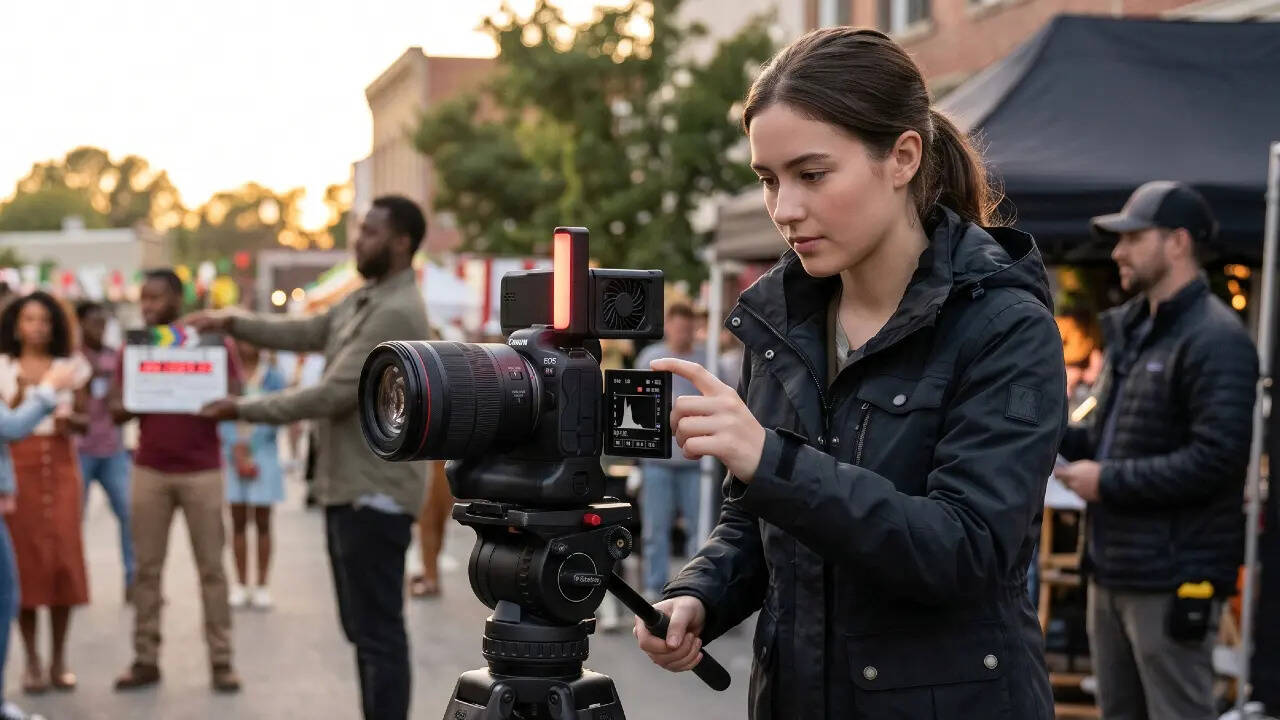
For Canon, machine learning is a tool to bridge the gap between a photographer’s lightning-fast reflexes and the mechanical speed of the camera hardware. “By working together with AI, we plan to realise the intention of the user to capture what is out there, not just create something completely different. AI comes in handy when we use it as a feature. It is human that decides the creativity of the output. So, by utilizing AI, many things should be automated, but at the end, it’s a creation of human that we want to stick back in their users’ experience,” Ikeda emphasised.This philosophy of “catching human intent” isn’t a vague marketing concept; it is deeply coded into the real-time processing engines of Canon’s latest flagship bodies.Ikeda said that Canon has been working on how to infuse AI with human creativity. For example, in a fast-moving basketball game, for example, a standard autofocus tracking system can easily get confused. If two players cross paths, or if a referee steps directly in front of the lens, a traditional camera may shift focus to the nearest obstacle or lag behind the play.“For example, we have launched our camera called R1 that had a feature called action priority. It is an AI-powered autofocus feature that automatically detects and focuses on players performing key actions during sports,” he explained.
Part 3: Optics engineering
An advanced camera body is only as capable as the glass mounted to its mount. Alongside the EOS R6V, Canon introduced an innovative piece of optical engineering: the RF 20-50mm F4L IS USM Lens. This represents Canon’s first-ever professional-grade, L-series full-frame lens to feature a built-in, fully integrated electronic power zoom mechanism.For traditional still photographers, manual mechanical zoom rings are the gold standard. For cinematographers, however, manual zooming during a live take is incredibly difficult to execute cleanly. Manually turning a lens barrel frequently introduces microscopic jerks, micro-jitters, and sudden speed variations that immediately break the cinematic illusion.

The RF 20-50mm addresses this issue by introducing Power Zoom system, allowing operators to zoom across the entire 20-50mm focal range by zoom lever located directly on the compatible camera body. The lens features a zoom mode selector switch, allowing users to instantly jump between automated power zooming and standard, mechanical manual zoom operations whenever a shoot demands a traditional feel.To provide granular artistic control, both fast and slow electronic zooming are highly customisable, featuring 15 distinct levels of configurable speed control. This allows an operator to set up an incredibly slow, barely perceptible 10-second push-in for a dramatic dramatic scene, or a rapid, high-impact snap-zoom for an action sequence.Crucially for filmmakers utilizing stabilization hardware, the lens is engineered with an internal zoom design. The physical length of the lens barrel does not change by a single millimeter when moving from 20mm to 50mm. Because the physical weight distribution remains perfectly static, electronic gimbals and balanced step-up crane rigs do not require rebalancing when zooming during a shot, saving hours of configuration time on busy production sets.
Part 4: Why canon protects its mount
One of the most heavily debated topics across modern camera communities is Canon’s strict, historically protective stance regarding its proprietary RF lens mount. Unlike competitors who opened their mirrorless mounts to third-party manufacturers early on, Canon has maintained a highly controlled approach to its electronic interface.This policy has drawn critique from budget-conscious consumers who want inexpensive, entry-level lenses from third-party brands. However, at the launch event in India, Canon’s leadership addressed this critique directly, saying that serious creators want absolute engineering precision and the true cost of long-term ownership.
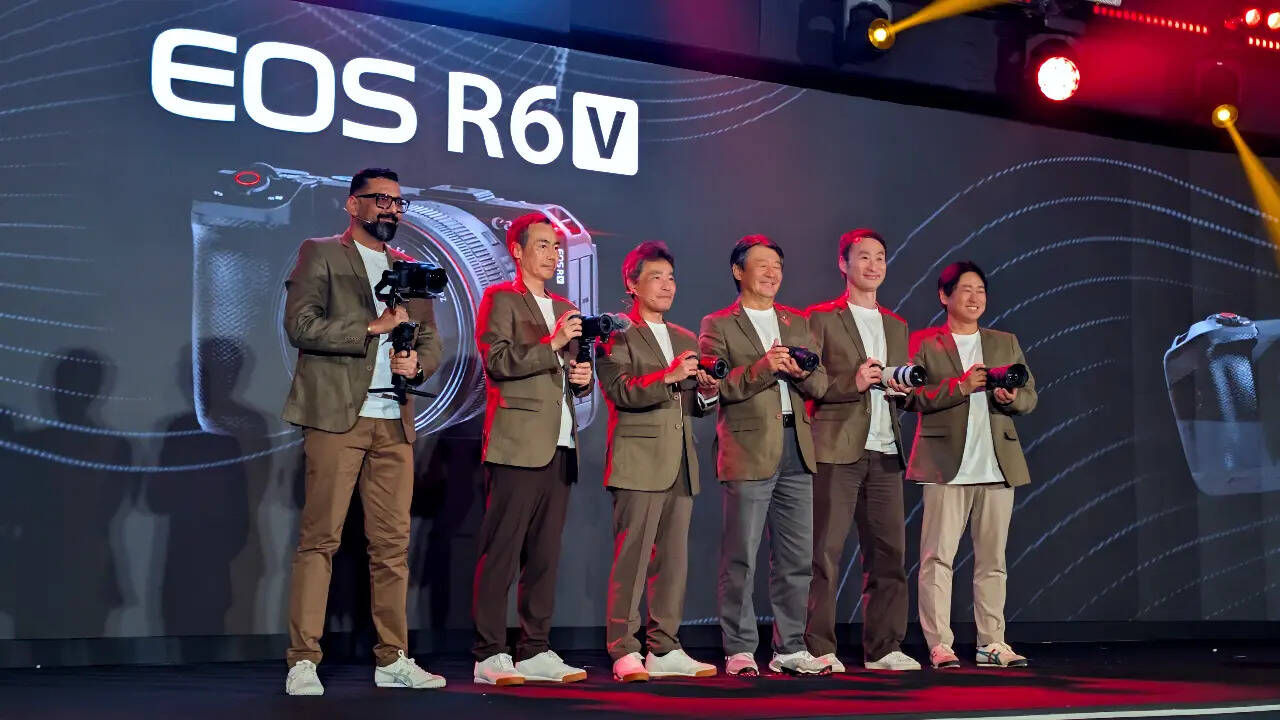
Vishesh Magoo, Assistant Director and Head of the Imaging Communication Business Centre at Canon India, challenged the consumer obsession with cheap third-party options:“Our learning is that Indian customers do not crave cheap lenses, and we are not trying to be cheap,” Magoo told TOI. “What customers want is value for the money they spend. I’ll give you examples from today’s session. First, you need not buy multiple lenses when it comes with Power Zoom. The quality is great. You buy once, you get peace of mind,” he added. Magoo highlighted that looking at the price tag of a bare lens is a flawed way to evaluate production costs. For instance, because the unified stabilization of the EOS R6V and the RF 20-50mm lens is strong enough to completely replace a standard motorized stabiliser, a creator saves the cost, weight, and setup time of a Rs 50,000 gimbal rig.“While there are many options available in the market, Canon reduces the total cost of ownership. Canon is working to provide high quality so that you buy once and then you don’t have to keep spending or keep upgrading in the future. When customers say they have been using our lenses for 10 years, it busts the myth that the customer looks for cheap. They look for value, and Canon is trying to provide that value,” Magoo explained.
Part 5: India as a global production epicenter
The decision to launch the professional EOS R6V kit alongside a dedicated campaign titled #IndiaInMotion highlights India’s rapidly growing importance within Canon’s long-term global roadmap. The country is no longer viewed merely as a large consumer market for basic electronics, but as one of the world’s most dynamic and demanding visual storytelling hubs.

Tiger Ishii, Managing Executive Officer of Canon Inc. and President & CEO of Canon Singapore, underscored the strategic weight the country carries on the global stage:“India is one of our most strategic markets worldwide, standing at the forefront of a powerful storytelling evolution. From weddings, cinematography, and regional cinema to digital-first content and independent productions, creators today demand tools that deliver cinematic excellence, mobility, and workflow agility without compromise. With the launch of the EOS R6V camera and RF 20-50mm F4L IS USM lens, we are reinforcing our commitment to this evolving video ecosystem,” Ishii stated.This sentiment was reinforced by Toshiaki Nomura, President & CEO of Canon India, who pointed out that the new system’s competitive edge lies in its deep integration, acting as an all-in-one production studio.“Combining 7K Open Gate recording, advanced autofocus, in-body stabilization, and Canon’s first-ever built-in power zoom L-series lens, the new system delivers cinematic quality, mobility, and seamless workflows in one integrated setup,” Nomura said, adding, “As creators increasingly look for versatile, professional-grade solutions across weddings, regional content, and digital-first productions, we believe this launch will be a gamechanger for the next phase of video creation in India.”
Conclusion
As artificial intelligence continues to reshape the landscape of modern media, the definition of a photograph or video is unchanged for Canon. In the consumer space, AI has made imaging effortless but it has done so by – in some cases – detaching the output from the actual physical moment. Canon’s latest technological developments aims to prove that the future of premium imaging doesn’t lie in using machines to replace human eyesight. The true value of a dedicated, high-end camera ecosystem in the modern age isn’t simply about boasting a higher resolution or a sharper lens element than a smartphone – it is about providing professionals with the uncompromised tools required to document real human emotion, real physical motion, and authentic stories with absolute precision.