


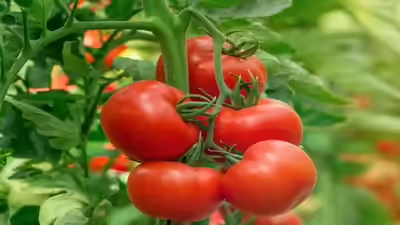
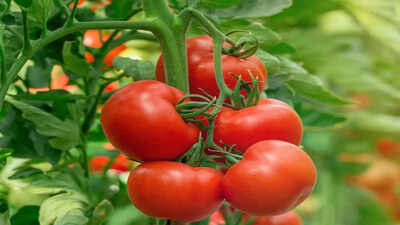
If you’ve been vaguely thinking about getting a little garden started this season, tomatoes are one of the best places to start. They’re not easy, but they are forgiving in the right ways, and once you know what they actually need, most of the guesswork is gone.Here’s what you need to know before you start planting.Timing is more important than you thinkTomatoes are high drama when it comes to the cold. Light frost can really set your plants back, so you want to wait until nighttime temperatures consistently hold at 50 degrees or above before moving anything outside. Soil temperature counts, too. Ideally, it should be at least 60°F during the day. Start indoors 4 to 8 weeks before your last expected frost date, then transplant outdoors when weather permits if you are starting from seed.One thing that many first-time growers find surprising is that heat can be as much of a problem as cold. Routine summer temperatures over 90°F will cause tomatoes to have difficulty pollinating, and they may even drop their flowers altogether. In warm states like Texas, Florida or Arizona, you’re better off planting early in the season, and perhaps again in early fall.Six to eight hours of sunTomatoes are sun-loving plants. They require a minimum of six hours of direct sun each day, and will do much better with eight. Before you pick out a spot to plant, spend a day watching where the light actually falls in your backyard or balcony. Usually, the best place is a south-facing spot. If you’re using containers, you have the benefit of being able to move them around to chase the sun.Plant them deeper than you think is rightThis is the bit that surprises most people. Tomato stems will root along their length, so planting a seedling deeper than you normally would gives it a much stronger root system. For a 10-inch seedling, you want only 3 or 4 inches above the soil. Whatever is buried below will gradually form more roots, anchoring the plant and helping pull in more water and nutrients as it grows.The soil conversation you don’t want to missYou need rich, well-draining soil. If your backyard has heavy clay soil that holds too much moisture, it can lead to root rot and fungal issues, so you’ll want to amend the soil before planting. Tomatoes need a good balance of nitrogen, phosphorus, and potassium, plus micronutrients such as calcium, zinc, and iron. A soil test (cheap and available at most garden centres) will tell you exactly where you stand, and whether your pH is in the ideal range of 6.2 to 6.8.

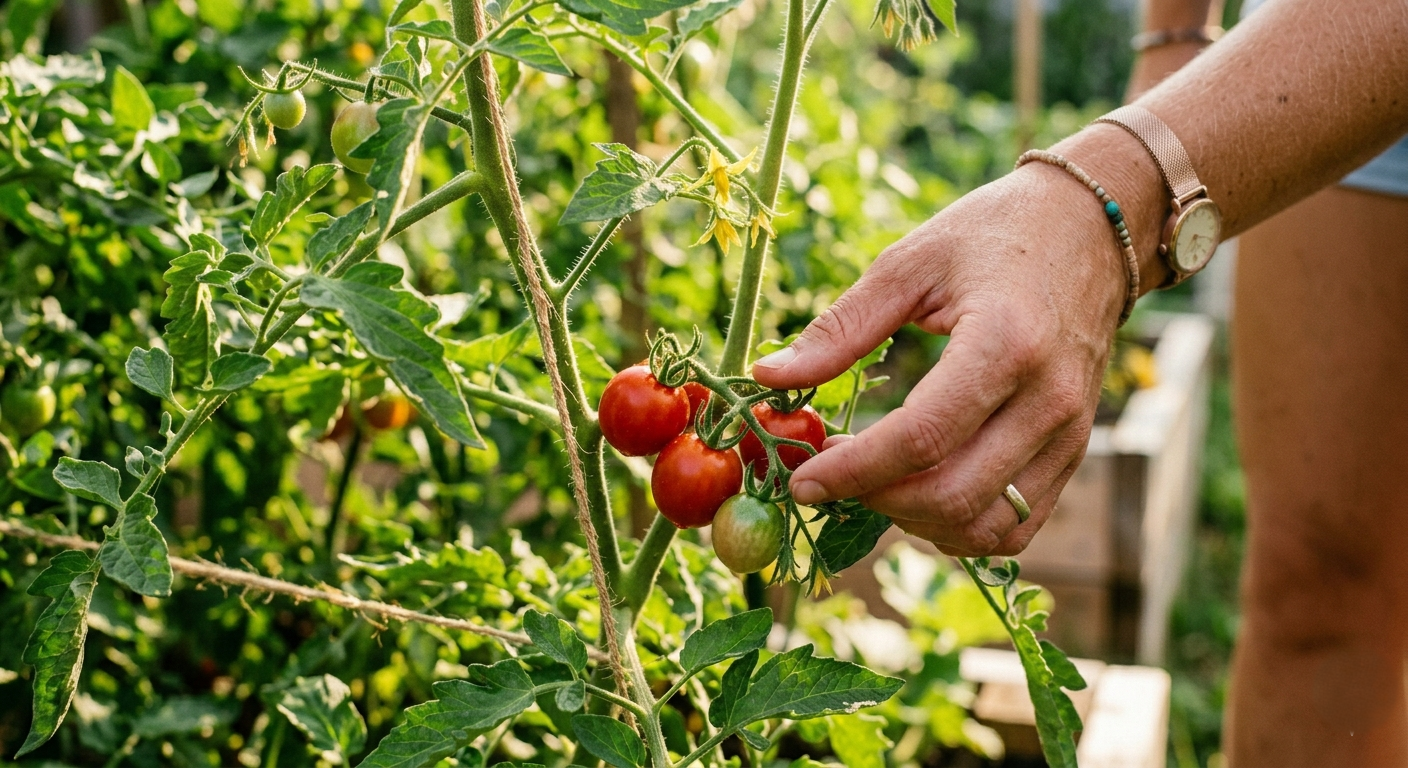
Tomatoes need consistent attention through the growing season, from pruning suckers to checking soil moisture daily. Image Credits: Google Gemini
Water regularly, but not excessivelyAs a rule of thumb, you want about an inch of water a week, but the more important principle is consistency. Irregular watering is harmful to the plants. Tomatoes crack when they absorb water too fast, such as a dry spell followed by a heavy soaking. Check the soil every day by sticking your finger about an inch deep. If it is too dry, add some water. Always water at the base of the plant, not on the leavesIndeterminate varieties require supportNot all tomatoes grow the same way. Determinate varieties, like Roma or San Marzano, grow into bushy plants, with the fruit ripening all at once, and don’t require much structural support. Indeterminate varieties, such as cherry tomatoes and most beefsteaks, keep growing upward on their vines all season long and need cages, stakes, or trellises. Look for six-foot-tall structures or taller, and tie stems in place with garden twine as they grow.Prune the suckers on indeterminate plantsThe little shoots that grow in the crook between the main stem and a side branch? These are suckers and should be regularly removed from indeterminate tomatoes. Left unchecked, they will drain energy from fruit production and create a thick canopy that holds moisture and promotes disease. As soon as the first blooms appear, begin pruning, and continue pruning every two weeks through the season. One exception: the sucker immediately below the lowest flowering branch can be allowed to develop into its own fruiting stem.Plant basil nearby; science backs this upThe tomato-basil combination isn’t just a culinary cliché. Turns out the two plants actually help each other in the garden. According to a 2024 study published in Plant Cell Reports, tomato plants respond better to damage and stress when exposed to volatile compounds released by basil, thereby improving their natural defence mechanisms. Separately, a West Virginia University thesis study found that basil interplanted with tomatoes yielded about 20% more, particularly at higher planting densities. Herbs like garlic, dill and parsley also help deter pests, along with basil, while flowering plants like lavender attract the pollinators your tomatoes need.Pick them early before they are ripeWhen your tomatoes begin to turn colour, pick them up. You don’t have to wait until they are fully ripe on the vine. Picking them when they are about half green and half pink and letting them ripen on your kitchen counter actually protects them from pests and birds, who are also very aware that something good is happening in your garden. When ripe, a tomato will be shiny and will yield slightly to gentle pressure.Growing your own tomatoes is one of those things where the payoff is really out of proportion to the effort. A little planning ahead, a little attention throughout the season, and by August, you will have more tomatoes than you know what to do with. Which, honestly, is the best kind of problem to have.