


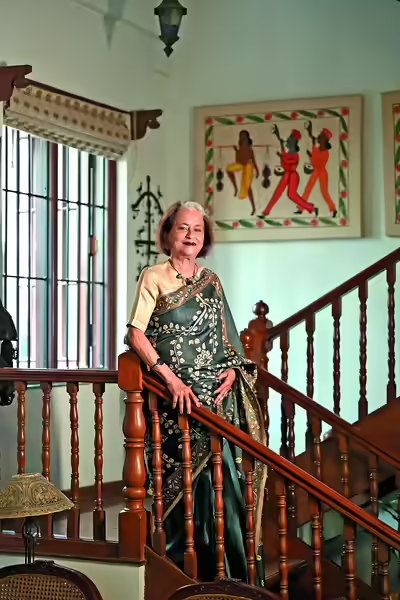

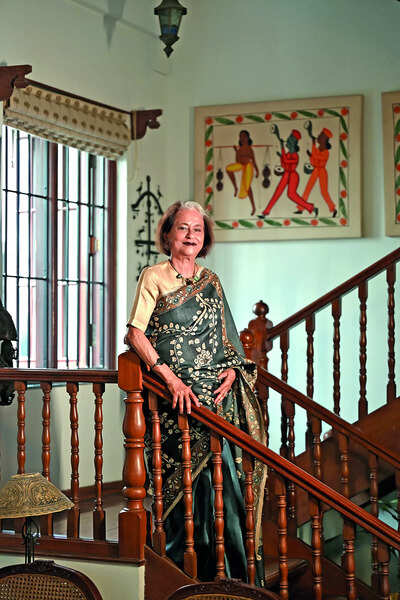
Textile designer Nandita Raja, co-founder of Kanishka’s, began her journey in 1970 from the quiet corners of her home. With no formal training to guide her, she shaped a distinctive design language through instinct, deep engagement with craft, and an enduring love for folk art. What followed was a lifetime of working with textiles – each piece reflecting years of practice, patience, and originality. In a conversation with us, she looks back on her beginnings, her creative philosophy, and the path she carved for herself.How did it all begin?I did not learn design from a school. I learned it at home. In 1970, I was a young housewife in Kolkata with a small son. I had no formal education in textiles or design. At that time, there were no fashion schools, no design institutes, and very little exposure to anything called “fashion.” I only knew that I wanted to do something with my hands. My husband (Dilip Raja), always encouraged me. He told me I did not need to work outside the house. I could sit at home and do something meaningful with my talent. What started as a hobby slowly became my work, although I never planned it that way.You learnt the craft without any formal training…My first sari was a cotton Bengal handloom sari. Nothing came easily then. Printing blocks were hard to find. Colours had to be mixed by hand. Printers and block cutters were difficult to locate. I did everything myself. It was hard work, but I learned by doing. I started with 10 printing blocks. Now, after more than 50 years, I have nearly 10,000 blocks. Each one represents time, effort, and learning. I didn’t have teachers; instead, fabric, colour, and mistakes taught me.Why did you choose to work with Bengal handloom saris in your early days?At that time, most printed saris were mill-made or screen-printed. I felt that the Bengal handloom was being ignored. I wanted to print on handloom saris that carried texture and character. With help from traders in Barabazar, I began going early in the morning to Howrah to source fabrics. The first sari I selected was a Dhonekhali handloom – off-white, with red, black, and yellow borders. It was simple, honest, and strong.Do you still work the traditional way, without digital tools?Even today, I work only with handloom and traditional block printing. I do not do digital printing. I personally sit with my work and design every day – deciding colours, motifs and combinations. I do not use a computer, rather I don’t know how to use it. I still draw designs in a khata. Block printing on this scale is rare now, but I continue as this is the only thing that I know.Your thoughts on design replication…People copy my work. Earlier, it bothered me. Now, it doesn’t. My husband once told me, “They can copy your sari, but they cannot copy your mind.” He is there no more but his words are something I still believe.

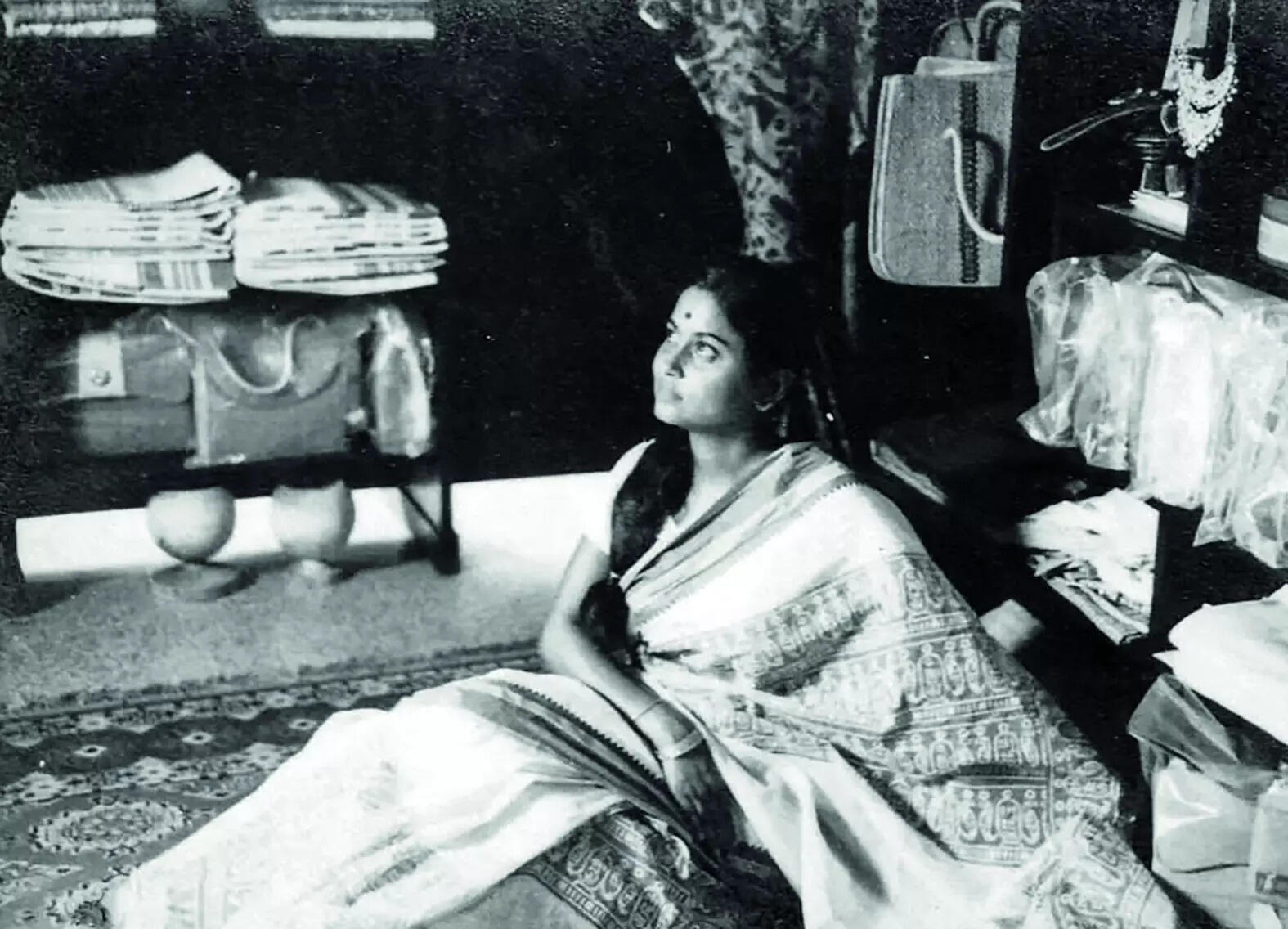
A young Nandita Raja sits draped in a handloom sari in a throwback pic from 1970A young Nandita Raja sits draped in a handloom sari in a throwback pic from 1970
August 15, 1970: Starting the brandNandita recalls the beginning: “On 15th August 1970, I started Kanishka’s from my home, with no shop, no studio, and no big plan.” She created a few saris, shared them with “neighbours, friends, and relatives,” and they sold instantly. “That’s how the Kanishka’s family began — quietly and simply,” she says, never imagining it would last decades. Growing with KolkataI have always worked from Kolkata. Bengali customers are demanding, but they are also experimental. They question, they observe, and they appreciate originality. In the beginning, non-Bengali customers did not take to my work as much; the scripts confused them, though they slowly began to appreciate it. Bengalis, however, supported me from the start. Kolkata has always stood by me – and still does.When I started, floral patterns were everywhere; village travels revealed richer folk art, making me question why these stories aren’t on sarisI have never called myself a fashion designer; I am a textile designer. I did not learn from design school but from fabric, colour masters, block cutters, and printers