


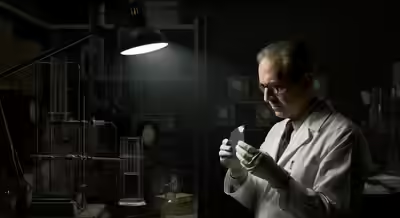
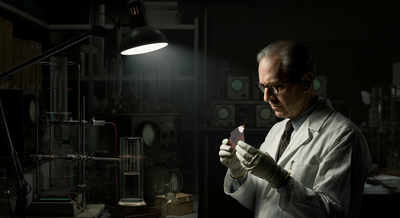

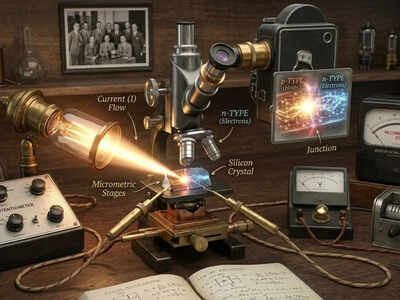
In 1940, while working at Bell Laboratories, Russell Ohl was conducting experiments on silicon crystals. This is when he stumbled upon an occurrence which would later serve as the basis for developing solar panels, transistors, and other electronic devices, such as those present in our computers, phones, sensors, and satellites.It happened during the process of testing a broken silicon slab (crystal). The material showed a rather peculiar response to the electric current flowing through it. As it turned out, Ohl discovered the presence of the peculiar p-n junction in semiconductor materials. It is important to know, since this experiment shows that even a simple breakage may assist scientists in understanding crucial technological principles.An unusual reaction of a broken silicon crystal to an electric currentOhl performed routine experiments on silicon crystals using intense lighting. However, this time, something unusual happened – it seemed like the break in the crystal caused the current flowing through it to respond differently than expected. As scientists concluded later, there was a transition area between two regions of the crystal with varying electrical characteristics.This effect was named the p-n junction. Why was this discovery important? It gave proof of the ability of semiconductors to affect the passage of current through the material, and not just conducting or resisting an electric current. Nature published that the discovery of Ohl was a breakthrough in the investigation of silicon and semiconductor properties.Why was the p-n junction important?It played a major role in electronics because it allowed researchers to control the passage of electric current through electronic devices. Solar cells make use of semiconductor junctions to generate electricity from sunlight. Silicon remains the predominant material used to construct solar cells today.Therefore, it can be seen that the discovery made on the cracked silicon slab is very relevant to the functioning of many solar cells today. The idea proved useful in designing other semiconductor devices aside from solar cells. For instance, diodes, transistors, and photodetectors rely on specific electrical junctions in silicon semiconductors.In a review article in Nature magazine discussing graphene-silicon photodiodes, one is reminded that the concept behind p-n and p-i-n semiconductor junctions remains relevant to the currently used optoelectronic designs.

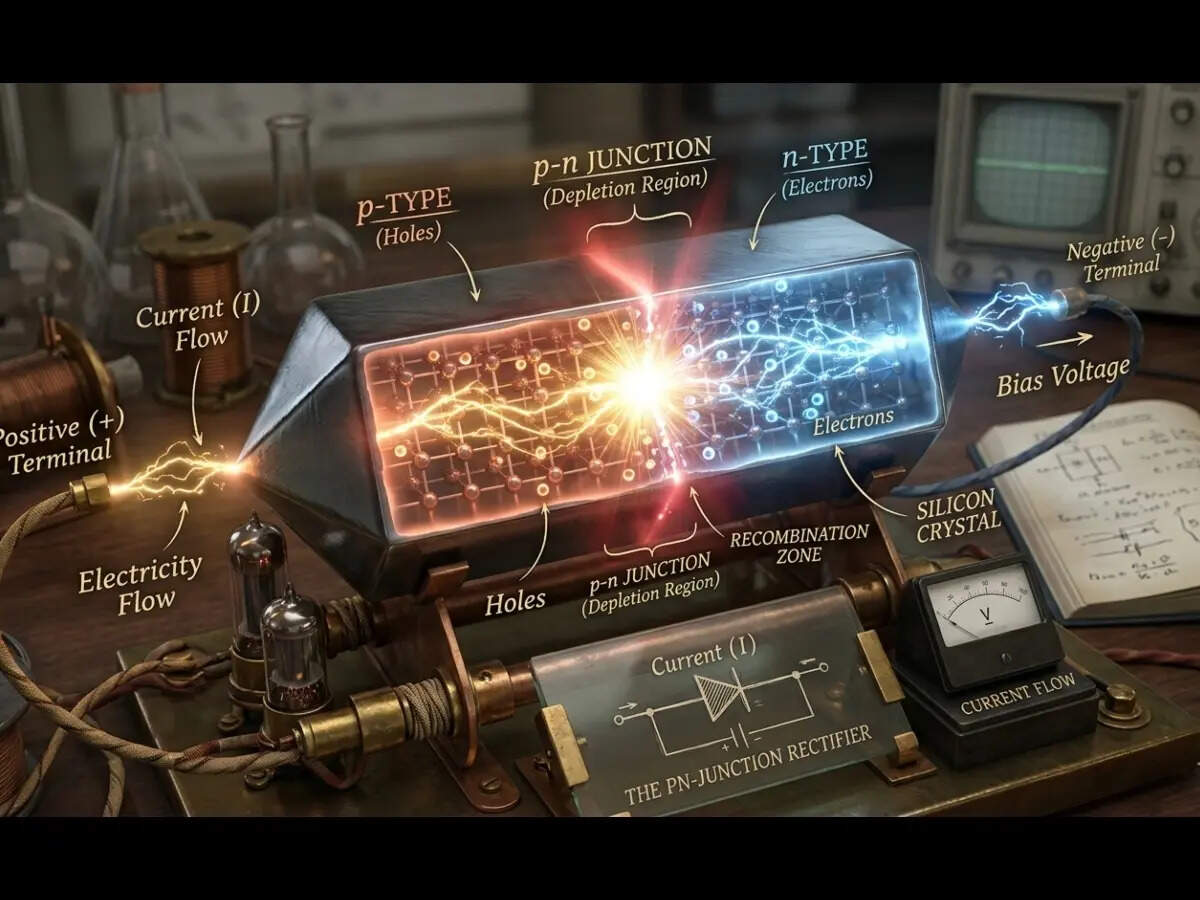
Russell Ohl noticed an unexpected flow of electricity that helped shape the future of computing. Image credit – Gemini
From the laboratory bench to solar cellsThe semiconductor technology contributed significantly to the development of a range of electronic equipment, including solar panels. From the information provided by various publications, it seems that Bell Telephone Laboratories came up with the first-ever solar cells that could be used to supply satellites. It was important to note this information since it helps to demonstrate the significance of the contribution made by Ohl in his discovery of the photovoltaic effect for practical applications.With the theory behind the working mechanisms of the semiconductor junction being known, scientists were able to create devices capable of converting light energy into electrical energy. In terms of silicon being a subject of scientific curiosity, the latter soon turned into an engineering material. What is particularly impressive about it is how quickly that transformation occurred.How the wrong sample led to the discoveryScientists refer to Ohl’s experiment due to a discovery made using a flawed sample. It appears that it was the crack in the silicon crystal that helped the scientist learn more about how the material functions internally. A number of scholars note that there is a possibility for discoveries to emerge owing to malfunctions or anomalies.What is more important in this particular situation is the fact that it was the crack that helped the scientist spot an electrical structure. Nevertheless, a discovery made this way cannot be attributed to mere chance. The scholar recognised the peculiarity of the current behaviour, and further research brought success. In other words, there is a combination of both lucky discovery and interpretation.Why the discovery made in 1940 matters nowadaysThe pn junction discovered remains to be one of the bases of modern semiconductor devices. Such elements as solar cells and photodiodes were discovered on the basis of this principle at Bell labs. Silicon junction technology remains to be the basis of modern photovoltaic technology.The scientists have been working hard to produce different devices with junctions. In other words, the silicon block that Russell Ohl had smashed into was not just an amusing experiment but a major step towards scientific progress and technological advance.As a result of illuminating the device, a mysterious electric boundary was found, which served as the basis for building computers and producing solar energy. One hundred years since the discovery of this boundary, its principle is still in use today.