


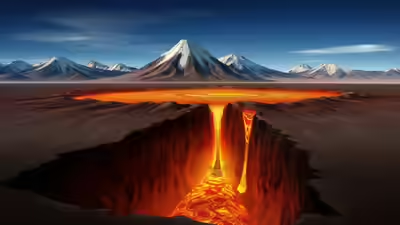
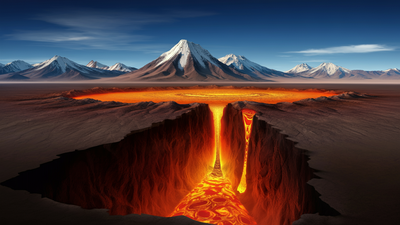
Scientists have uncovered a colossal magma reservoir, the largest ever imaged, lurking miles beneath the Andes. This molten body, approximately 125 miles wide, is actively expanding, causing the entire Altiplano-Puna plateau to rise.
In the high Andes region of South America lies the Altiplano-Puna plateau, a harsh, windswept terrain reminiscent of something found on another world rather than being part of our very own. Second only to Tibet as far as altitude and volcanism are concerned, the Altiplano-Puna plateau is an extremely elevated landmass whose peaks almost scrape the heavens as if trying to touch the sky. In the past, the belief was that the mountains in this region had formed purely from plate tectonics, which saw their surfaces pushed up through scraping and shortening. But there is a big, bright secret lying about ten miles underground.In the middle crust of the central Andes, there lies an extensive molten magma reservoir known as the Altiplano-Puna Magma Body. This is not any ordinary underground body of lava but a massive and active magma reservoir that has been recognised by geologists as the largest imaged magma reservoir on Earth. At approximately 125 miles wide, this magma reservoir is more than enough to supply a whole chain of volcanoes. However, the shocking part about this huge body of magma is its ability to expand.A breathing mountain domeWhen studying the effects of a massive magma chamber like the one beneath the Andes Mountains, one should pay attention to the ground itself. What was expected to be a localised rise due to magma chambers has revealed a whole new mountain dome that spans throughout the region.This process was described in an important study in the journal Nature Communications, which made an important link between the formation of this magma and the uplift. According to the scientists who examined data on gravity anomalies and crustal deformation, this magma accumulation contributes to the uplift of the plateau due to its continuous intrusion. The whole discussion on the formation of mountains took another turn, as not only did the collision of tectonic plates contribute to the raising of the Altiplano-Puna, but also this new “engine”.

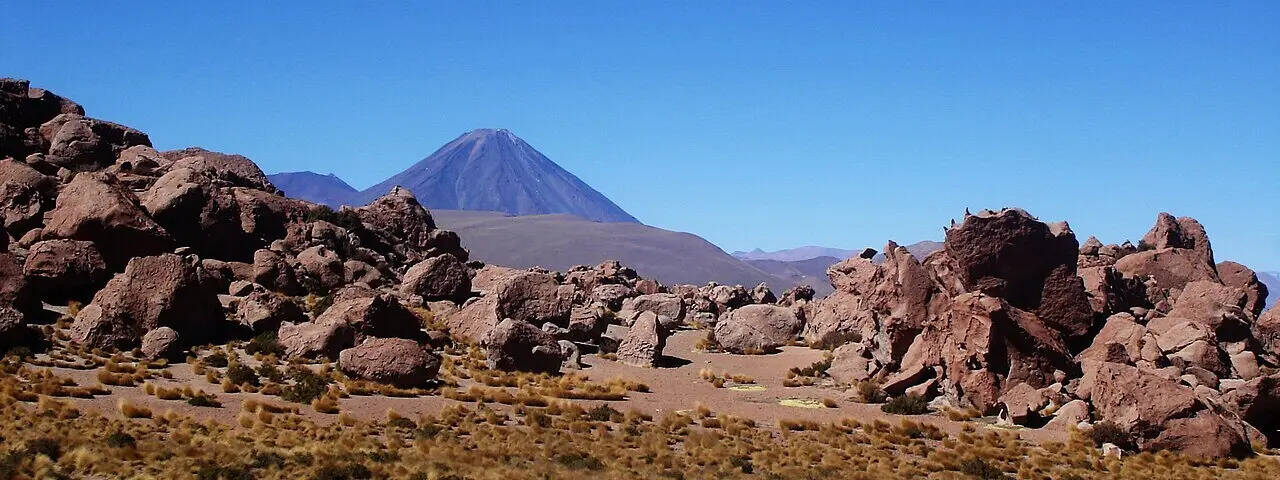
This ‘breathing mountain dome’ phenomenon reveals a powerful underground engine, reshaping our understanding of mountain formation beyond just tectonic plate collisions. Image Credits: Wikimedia Commons
Mapping a ghost in the machineBecause there is no technology to look ten miles into the ground, seismology helped to map out this magma accumulation by seismic “pings” and gravity anomalies. In particular, they discovered an unusually large zone of low velocity, which means that the seismic waves slowed down when passing through this low-velocity area, filled with hot and viscous rocks of this reservoir. Thus, thanks to this data, they managed to visualise an area resembling a sill – a massive flat magma accumulation.This phenomenon is explained thoroughly in the scientific study called Sombrero Uplift Above the Altiplano-Puna Magma Body, where this process is described as being part of a “ballooning” process. The idea here is that the mid-crust is like a large-scale pump. As more melt moves into the region, there is simply nowhere else for the crust to go except to push upwards in a sombrero-like manner. This study is one of the best examples possible of an invisible force at work shaping our reality, and shows that the most imposing mountains owe their strength to a fiery core below.The discovery of the Altiplano-Puna Magma Body is another example of the realisation that there is still a lot left to learn regarding the processes of the planet’s inner workings. While it is very easy for humans to admire the mountain ranges standing tall from one mountain peak, in reality, what we are only seeing is the roof of the underground factory that works around the clock in order to raise the horizon just a little bit higher.