


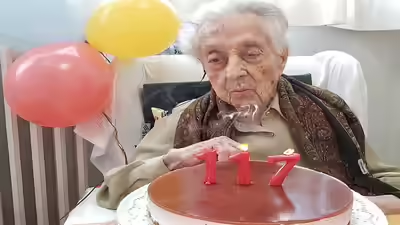
Imagine having a 117th birthday celebration with a sharp mind, a strong heart, and enough energy for the daily walk. If you’re Maria Branyas Morera, this was not just a wish; it was her reality. Although most people think of getting older and falling sick as two different sides of the same coin, Maria proved that the human body ages according to a timetable without deteriorating internally.In the years before her passing, scientists were fascinated by her life in order to discover how she added more than three decades to the average life expectancy for women from her region, Catalonia. The results have changed the way we think about life expectancy, proving that the term “long life” doesn’t necessarily mean a lifetime of illness.The molecular clock running in reverseIn order to understand why she was such a resilient person, scientists from the Josep Carreras Leukaemia Research Institute performed a multi-omics analysis of her biopsies. The findings were published in the well-known publication Cell Reports Medicine and discovered the similarities in Maria’s internal chemistry to those of a younger person.The researchers employed advanced technology known as epigenetic clocks that determine the age of a person by looking at chemical tags in the DNA. In six biological tests, Maria’s tissues always measured between 10 and 30 years older than her age at the time of study. A particular clock that measured the ribosomal DNA also suggested that Maria’s cells functioned like those of a woman in her mid-90s.Incredibly, her body displayed unpredictability. The telomeres in her body, the caps that protect the ends of chromosomes, which typically shrink as we get older, were extremely tiny. In most people, short telomeres signal impending disease. Researchers have speculated that, in the case of Maria, those worn-down caps could protect her from cancer by restricting the number of times that cells can divide and expand beyond control.

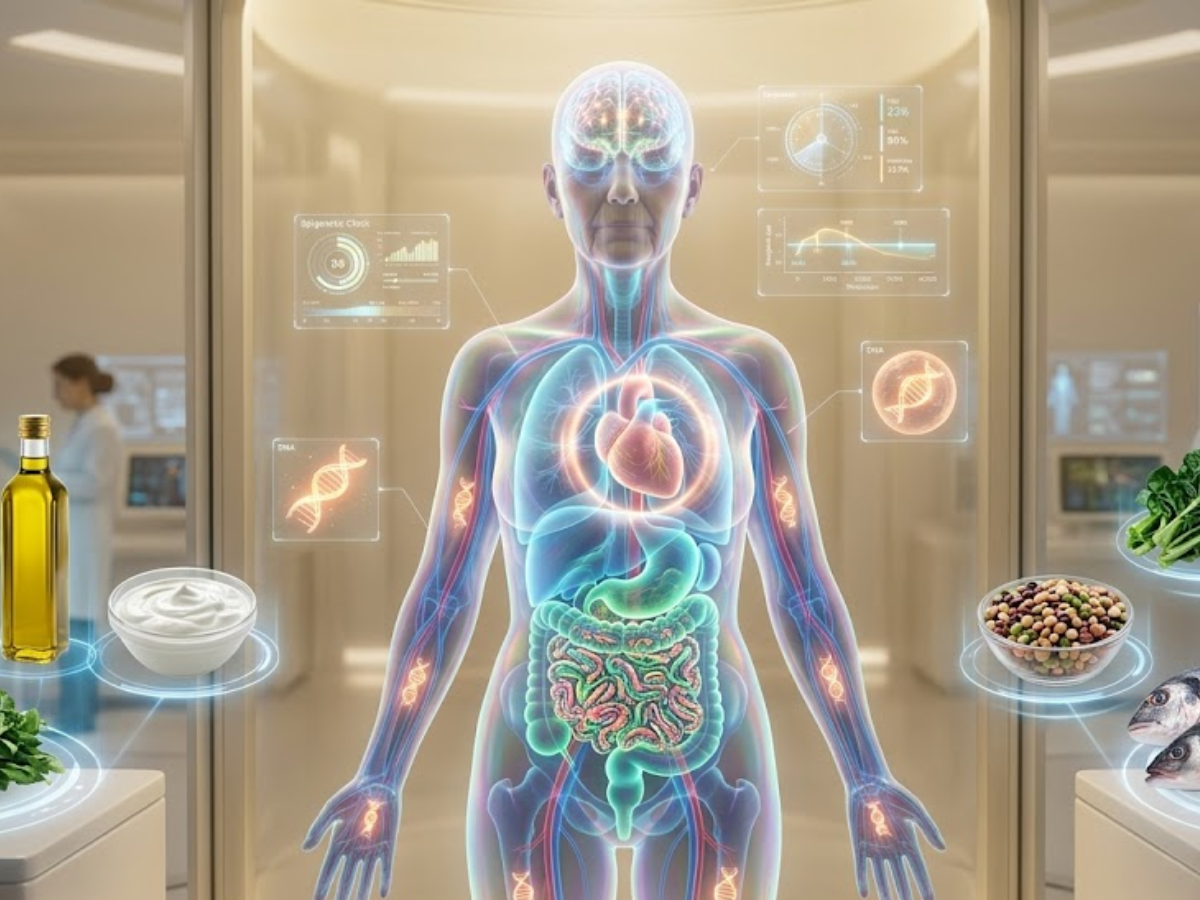
Scientists discovered her internal chemistry mirrored younger individuals, with a unique microbiome and a Mediterranean diet, including daily yogurt, contributing to her remarkable health. Image Credit: Gemini
A childlike microbiome and everyday choicesIn addition to her amazing genes, Maria’s habits of daily life generated an environment inside her which doctors are actively trying to recreate for patients. One of the most important findings from the research was the health of her gastrointestinal tract. The microbiome in her intestinal tract was comprised of the diverse bacterial community typically observed in infants and kids. Her microbiome was extremely high in Bifidobacterium, which is a helpful bacterium that naturally decreases as you age and keeps full-body inflammation at a minimum.The optimal health of her gut is closely correlated with her lifestyle. Maria adhered to a strict Mediterranean diet. Every day, her meals included an extensive selection of vegetables and olive oil, legumes, as well as small portions of seafood.The secret weapon of her kitchen was the yoghurt. The average woman consumed three cups of plain yoghurt every day. The live bacteria that are present in these yoghurts, including Streptococcus thermophilus as well as Lactobacillus delbrueckii, acted as a natural fuel source, promoting the development of young organisms in her body.Lessons for the rest of usHer lifestyle directly influenced her blood chemistry in a way that would delight any cardiologist. Maria kept extremely low levels of triglycerides as well as high-density lipoprotein cholesterol that was dangerously low, along with a high level of high-density lipoprotein, a protective cholesterol. In addition, she showed little or no sign of chronic inflammation, which is the main cause of cardiovascular disease as well as a decline in cognitive function among older adults.Although she had unique and uncommon genetic variations that gave her robust immunity and strong cellular powerhouses, her experience highlights the tremendous significance of our daily routines. Maria did not smoke, totally abstained from alcohol, exercised all day long, and was a constant part of the people around her, her gardening, and the animals she had.There is no way to change the fate of our genes. Given, however, Maria’s remarkable adventure proves that every day choices regarding our food choices, movements and emotional connectivity determine how the dice are rolled. Maria’s story has been left with an amazing molecular map and has proven that the process of ageing can be an enjoyable and healthy process rather than being a burden on our health.