


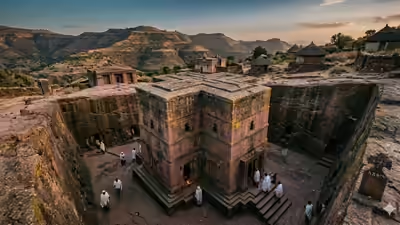
In the arid mountains of Ethiopia, a fascinating archaeological find has been unearthed that gives an inside view of life and death in the ancient community. Unlike spectacular finds in the form of monuments and royal tombs, the focus of this particular find is on common individuals and their day-to-day lives over the centuries. It has been possible for researchers to piece together the history of the labour performed, dietary habits, rituals, and even the manner in which the dead were buried within the society.
Archaeological discovery in Ethiopia: Unearthing everyday life
With the excavation work done by archaeologists, traces of buildings, tools, and community places have been found. It therefore means that the place had proper organisation because everything was planned concerning their daily activities, such as cooking, production of tools, and socialising.According to the article published in the Bulletin of the History of Archaeology, the analysis of settlements can offer scientists information on how the prehistoric society ran. As indicated by the scientists, “the material evidence from domestic environments is essential for understanding common practices, not elite ones.”Pottery fragments, grinding stones, and animal bones provide evidence of a combined subsistence practice, which involved agricultural production alongside cattle herding.
Life and death in ancient Ethiopia: Burial practices and rituals
Among the most intriguing elements of this archaeological site is its burial remains. Excavators found several burials located near residential buildings, implying that death had a place in the community, rather than being a tabooed and segregated practice. Instead, it seems as though the culture saw life and death as inseparable.According to a scholarly study, ‘Earliest known Oldowan artefacts at >2.58 Ma from Ledi-Geraru, Ethiopia, highlight early technological diversity,’ burials of this nature may be an indicator of strong ancestral traditions. Similarly, scholars explain that “the inclusion of the dead in or around settlements enhances social memory.”Artefacts recovered near burial sites include body decorations and tools, implying that those buried had significant items buried alongside them. The manner of the positioning of corpses and the reuse of burial grounds also imply ritualistic practices.
Scientific insights into daily rhythms and social structure
The site also provides scientific knowledge concerning the health, nutrition, and demographic composition of people through the use of Bioarchaeology techniques in analysing skeletons. Scientists from the Arizona State University who have carried out similar studies in other sites indicate that skeleton analysis is capable of “revealing habitual behaviours, labour intensiveness, and dietary stresses.”These observations contribute not only to an understanding of the way people lived but also to how they adapted to the environment around them. Seasonal rhythms can also be observed based on plant and animal bones, showing when agricultural activities and migrations took place.
Why this Ethiopian site matters as of today
What sets this Ethiopian historical site apart from many other archaeological sites is its relevance to humans and their lifestyle rather than any political figure or a king’s reign. The site highlights that not only did kings or other powerful figures create history, but the common man’s routine life played a significant role in it as well.As scientists employ a multidisciplinary approach to study this site, they have found some fascinating facts regarding the life and death of people living in those times. These findings are critical to understand the evolution of social structures and traditions that persist even today.To learn more about such research findings, one can access journals from the Max Planck Society website:In conclusion, the discovery in Ethiopia has bridged the gap between history and present-day humans.