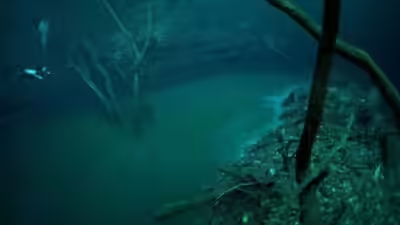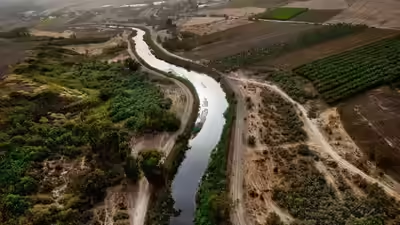
Rivers are thought of as a fertile environment with a variety of fish, flora, and fauna, as well as freshwater that is available for supporting life. However, there are rivers across the world that have a different story to tell. One of the rivers is the Jordan River, which is referred to as a river with a lack of fish, or sometimes with no fish at all.The description of the Jordan River may sound dramatic, but it is a reflection of a greater environmental crisis. The Jordan River, which was once a freshwater river, has undergone a great deal of ecological damage over the years. Although it is not entirely devoid of any fish, it can still support some aquatic life, but fish populations have declined sharply in many sections.
Where the Jordan River flows and has very less fish
The Jordan River runs through a very important geographical area, passing through Israel, Jordan, and the West Bank. The river originates at the base of Mount Hermon and flows southward into the Dead Sea.The river has served as an important source of water in the desert region for many centuries. The river is of great significance and is one of the most popular and well-known rivers in the world. The river is of great cultural and religious significance. However, the river’s natural state has changed significantly over the years.The statement that the Jordan River does not have any fish is not entirely correct. However, it is an indication that the number of water inhabitants in the river has reduced significantly. This is particularly in the lower stretches of the riverThe major cause of this is the diversion of water. The water in the river is used for irrigation and domestic consumption by the surrounding regions. This means that the natural water flow in the river is reduced to a fraction.Pollution is also another major cause. Over the years, the river has been subjected to a lot of pollution. This is in the form of raw sewage and industrial waste. This makes it difficult for the water inhabitants to breathe due to low oxygen levels.In some parts of the river, only a few species can be able to survive in the water.
Environmental impact on the ecosystem
The reduction of fish in the Jordan River has a broader impact on the ecosystem. This is because the fish play an important role in the food chain, and their reduction affects the birds and animals that rely on them.The reduction of water in the river has also meant that there is an increase in the concentration of water pollutants. This has affected the ecosystem even more. The wetlands that used to be found in the river have also been reduced, leading to a reduction in biodiversity in the region.Another effect of the reduction of water in the Jordan River is the reduction in the size of the Dead Sea. This is because the river is the primary source of water for the sea.
Efforts to restore the river
In order to realise the significance of the Jordan River, several initiatives have been taken to revive the river. Governments, environmental organisations, and international organisations are working hard to resolve the issues facing the river.Some initiatives include the development of proper wastewater treatment, pollution reduction, and proper management of water resources.There are talks about increasing the water level in certain areas of the river in order to achieve a balance in the river.It is clear that several initiatives are being taken to revive the river, though the process is still in the early stages.
The reality behind the “river with no fish”
It is important to point out that the description of the Jordan River as a river without fish is an oversimplification, though it portrays the seriousness of the environmental degradation.It is important to point out that the situation in the region is not unique, as there are several rivers across the globe facing the same issues.
Why protecting the Jordan River matters
The state of the Jordan River is an example of how fragile natural ecosystems are. When water resources are overexploited or become polluted, the impacts can be long-term and may not be easily reversed.The restoration and conservation of the Jordan River is not only beneficial to the ecosystem but also to the people living in the surrounding environment. The restoration of life in the Jordan River is an example of the need for sustainable living and the proper utilisation of resources.The story of the Jordan River is an example that even though the damage may be extensive, awareness and action can bring about hope for restoration.