


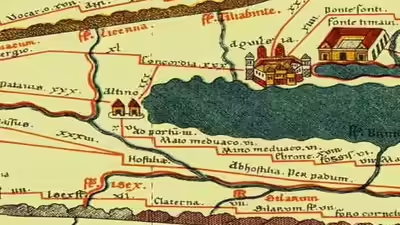
A Roman city can disappear from common eyes yet not be wiped out entirely. Roads and other structural features can leave behind faint signals underneath the water, which have been present there for centuries, sculpted by sedimentation, tide levels, and even sunlight. However, what has become possible recently is to spot these faint patterns from above.A study conducted in 2021 and published in PubMed revealed how researchers used a combination of satellite mapping and underwater acoustics to discover Roman roads, brick walls, and entire buildings in the Venice Lagoon area. The area of investigation was Altinum, an ancient Roman settlement affected by shifts in coastlines. It is evident that even underwater, a landscape may retain signs of a functional city.The ways in which satellites uncover hidden patternsSatellite scans work by detecting certain features of Earth’s surface and registering them. While the structural elements of ancient cities may no longer lie exposed, they still affect the landscape in some way.Various studies reveal that satellite imaging has become an important part of modern archaeology, helping to find hidden structures over vast territories. Satellite technologies have been used by researchers on land for quite a while, but now the techniques are being adapted for use in shallow water.The PaleoSuwannee project at the University of Florida observes that satellite sensing techniques are being evaluated as a means for predicting underwater sites. Simply put, satellite sensors cannot directly detect objects below several meters of water. They just show researchers which areas should be surveyed more carefully through sonar surveying.Satellite scans in the Venice Lagoon caseSatellite images analysis combined with acoustic surveys in the Venice Lagoon is one of the best cases of such an approach for detecting cultural heritage beneath the water. Road systems and buildings could now be identified thanks to satellite imagery, which proved to be a part of the Roman infrastructure.According to the findings of researchers, these structures were not chosen randomly. These elements created a pattern which was representative of the way that people moved and lived within the area. The roads would represent transportation corridors, while walls were used to demarcate property boundaries or public areas.This technique will not yield a comprehensive map in one snapshot. However, it allows for a gradual reconstruction based on a series of information layers. Satellite imagery indicates potential archaeological features, which are then confirmed using sonar technology and finally interpreted by archaeologists.

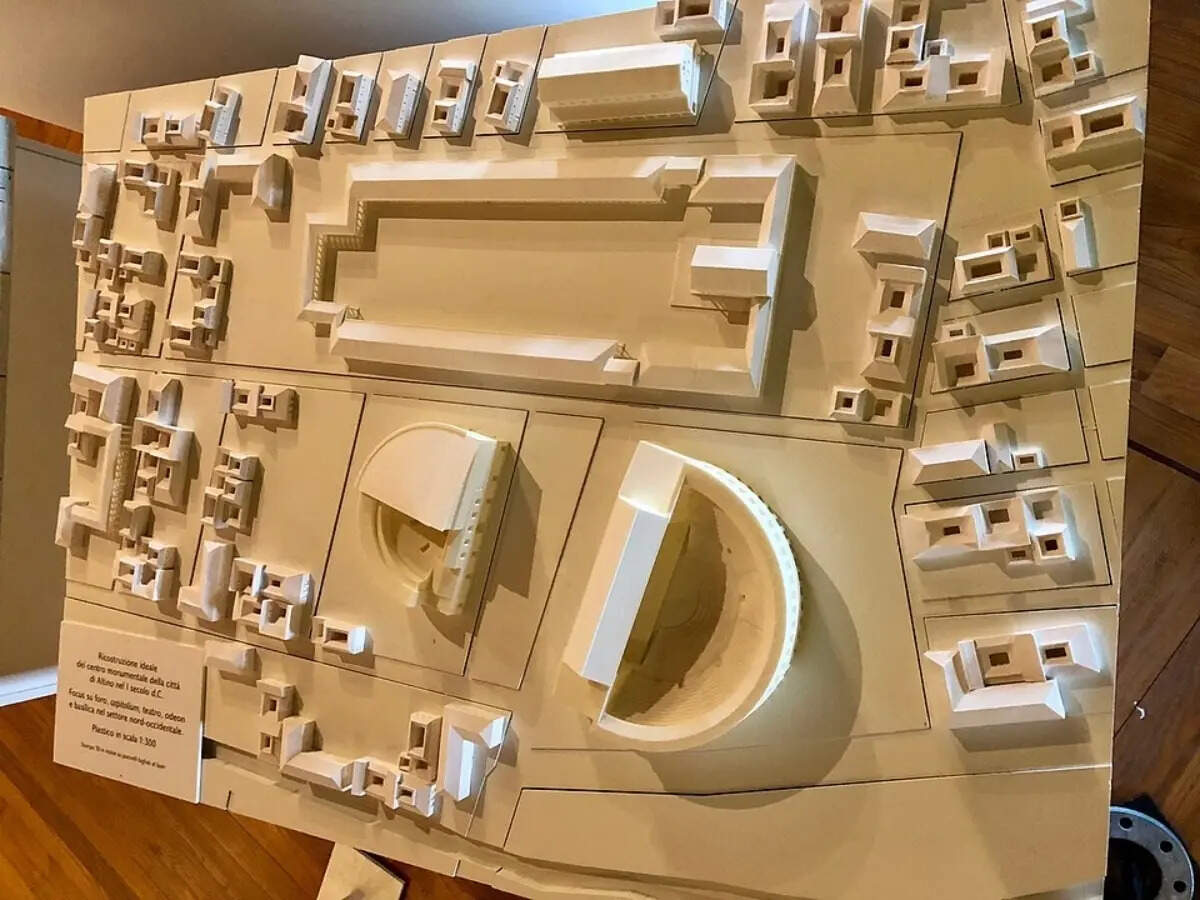
Archaeologists used satellites to uncover a Roman city hiding under waves. Image credit – Wikimedia
Why do Roman cities under the sea matter?Submerged locations allow for an interesting form of preservation. Archaeological finds made on dry land have been altered due to farming, construction, or subsequent settlement activities. By contrast, underwater settings can prevent human interaction and preserve original forms of architecture.The Venice Lagoon findings have shown how the submerged cities can conserve their original layout. This is crucial since Roman cities had very distinct layouts. For instance, roads typically connected critical sections of the city, while clustered buildings may have served different purposes.Such details give historians an insight into people’s everyday lives in ancient times. Furthermore, it demonstrates environmental changes. For instance, a city situated on dry land may gradually be submerged under water due to natural forces.The limitations of the technologyWhile it is attractive to believe that a lost city will be found by satellites alone, this assumption is wrong. The use of technology implies various methods used in tandem with each other. Although satellite imagery makes a good identification tool, it cannot replace direct research on its own.As explained by the University of Florida project, satellite imagery is an integral component of a larger methodology designed to predict the location of sites. Archaeologists are still using methods such as underwater surveying and analysis to verify their findings.Factors like depth of water, its clarity, and composition of sediment layers play an important role in detecting remains. Sometimes, even with all the advances made in satellite technology, certain sites may remain hidden.Interpreting hidden landscapes through novel readingsRather than a single discovery, the innovation here is methodological. Archaeology is becoming ever more predictive and scientific. Rather than blindly hunting, researchers can concentrate their efforts on places where evidence is most likely.The study of the Venice Lagoon reveals that while Roman subaquatic landscapes are hidden from view, they are far from inaccessible. The application of satellite technology and marine archaeology makes them increasingly accessible without damaging the landscape.What’s more, the innovation alters perceptions regarding the nature of history itself. A city does not necessarily have to be visible to be considered one. Indeed, in many instances, a city remains as a pattern below the surface until the appropriate tools are developed.