



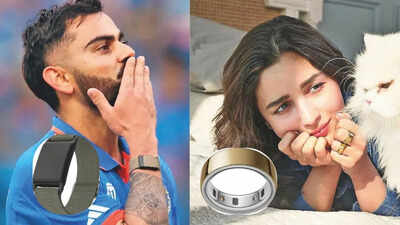
The quietest smart devices are seeing the loudest growth. Smart jewellery, especially rings and bands, is seeing strong adoption.
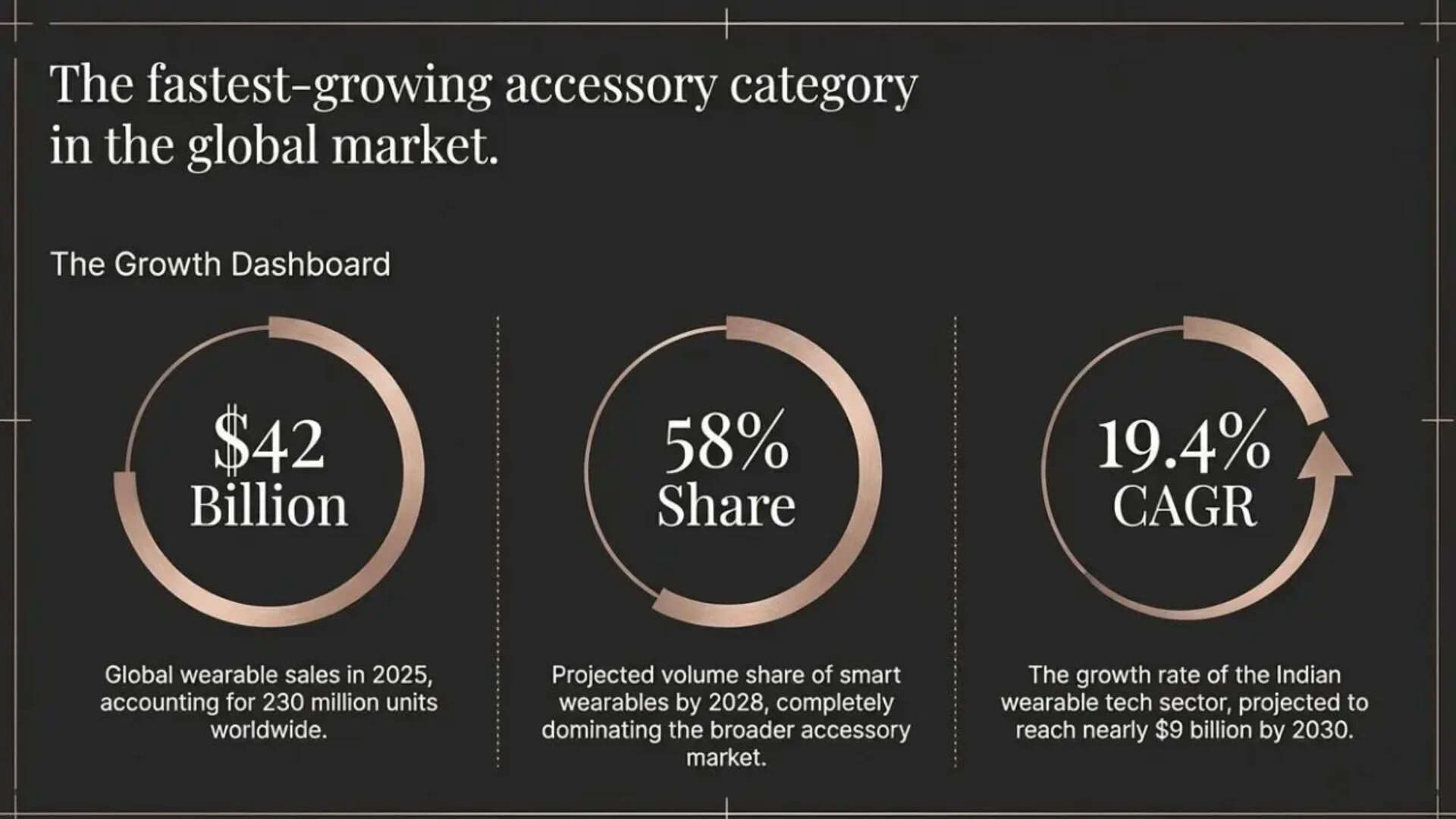
Not long ago, if someone wanted a smart wearable, it was usually a fitness tracker. The goal was simple: log your steps, monitor sleep, and track your heart rate. The device was slim, lightweight and built for constant wear. For most, that was enough. It counted your steps without stepping on your style.Today, wearables have moved well beyond the wrist. They sit on our fingers, hang around our necks, clip onto our lapels, and rest on our faces. They promise more than health metrics. Some record conversations, generate AI summaries, draft to-do lists and surface reminders drawn from everyday exchanges. Artificial Intelligence is no longer confined to your pocket. It is also on your body. Your glasses see. Your ring tracks data. Your pendant remembers.More importantly, it no longer resembles technology in its conventional sense. As Rocco Basilico, chief wearables officer at EssilorLuxottica, notes in the State of Fashion 2026 report, “There’s something beautiful about intertwining technology with fashion.” That intertwining now shows in numbers. Global wearable sales reached $42 billion in 2025, accounting for 230 million units. Smart wearables are projected to make up 58% of volume by 2028, making the category the fastest-growing accessory segment.According to Grand View Research, India’s wearable tech sector is projected to touch nearly $9 billion by 2030, growing at a CAGR of 19.4%. Wearables are no longer about counting steps. They are about owning data. About performance. About optimisation dressed as jewellery. If the first wave of wearables in 2014 was about utility, the second is about fashion.AI pendants operate as ‘second brain’ Startups like NeoSapien are building devices that handle tasks smartphones were never designed for. Rather than replacing phones, these audio-first wearables reduce screen dependence by recording conversations and turning them into searchable summaries. “Professionals don’t lose productivity because they don’t know things,” says Dhananjay Yadav of NeoSapien, “They lose it because they forget commitments.” That view is echoed across the category. A spokesperson for Luna says wearables will soften reliance on screens, not replace them, unlocking areas such as continuous biometrics, sleep patterns and recovery tracking.
People don’t want to look like technology
Billie Whitehouse, CEO, Wearable X to Vogue Business

The next wave will compete not just on intelligence, but on subtlety. As these devices grow more intimate, privacy concerns persist. “Consumer expectations regarding privacy haven’t gone away entirely, but they are shifting,” says Avi Greengart, an analyst at tech research and advisory group, Techsponential, to AFP, noting that people already live with constant digital surveillance.If it looks like tech, it ends up in a drawer

Virat Kohli is often seen sporting the screenless fitness band, Whoop. Basketball star LeBron James, Olympic swimmer Michael Phelps, and top golfers like Rory Mcllroy and Tiger Woods also sport the stylish band.
Consumers want better health insights, but adoption hinges on comfort and aesthetics. If a device feels intrusive or looks out of place, it is quickly abandoned. The luxury industry recognised this early. In 2015, Hermès wrapped its leather craftsmanship around the Apple Watch, signalling that tech could be tailored.Since then, partnerships between tech and fashion giants have grown. Meta teamed up with Ray-Ban to make smart glasses wearable. Oura partnered with Gucci on an 18K gold biometric ring, while Loewe and Jacob & Co created gemstone-finished headphones. Ultrahuman, too, collaborated with Diesel for a designer-led smart ring.“Fashion brands have an enormous opportunity to make wearable technology desirable,” Billie Whitehouse, CEO of Wearable X, told Vogue Business. If they look clinical or clunky, they end up in a drawer.
There’s something beautiful about intertwining technology with fashion
Rocco Basilico, Chief Wearables Officer, EssilorLuxottica in the State of Fashion 2026 report
A spokesperson for Luna Smart Ring adds that while people buy wearables for function, “daily use depends on how it feels and looks… if it’s uncomfortable or out of place, it won’t be worn.” Dhananjay agrees, “The more visible the technology, the more it distracts from the experience.”For some, discretion matters most. Rishiraj Shekhawat, 38, who uses a fitness tracker, puts it simply, “It shouldn’t stand out… that’s why a plain black band works for me.”
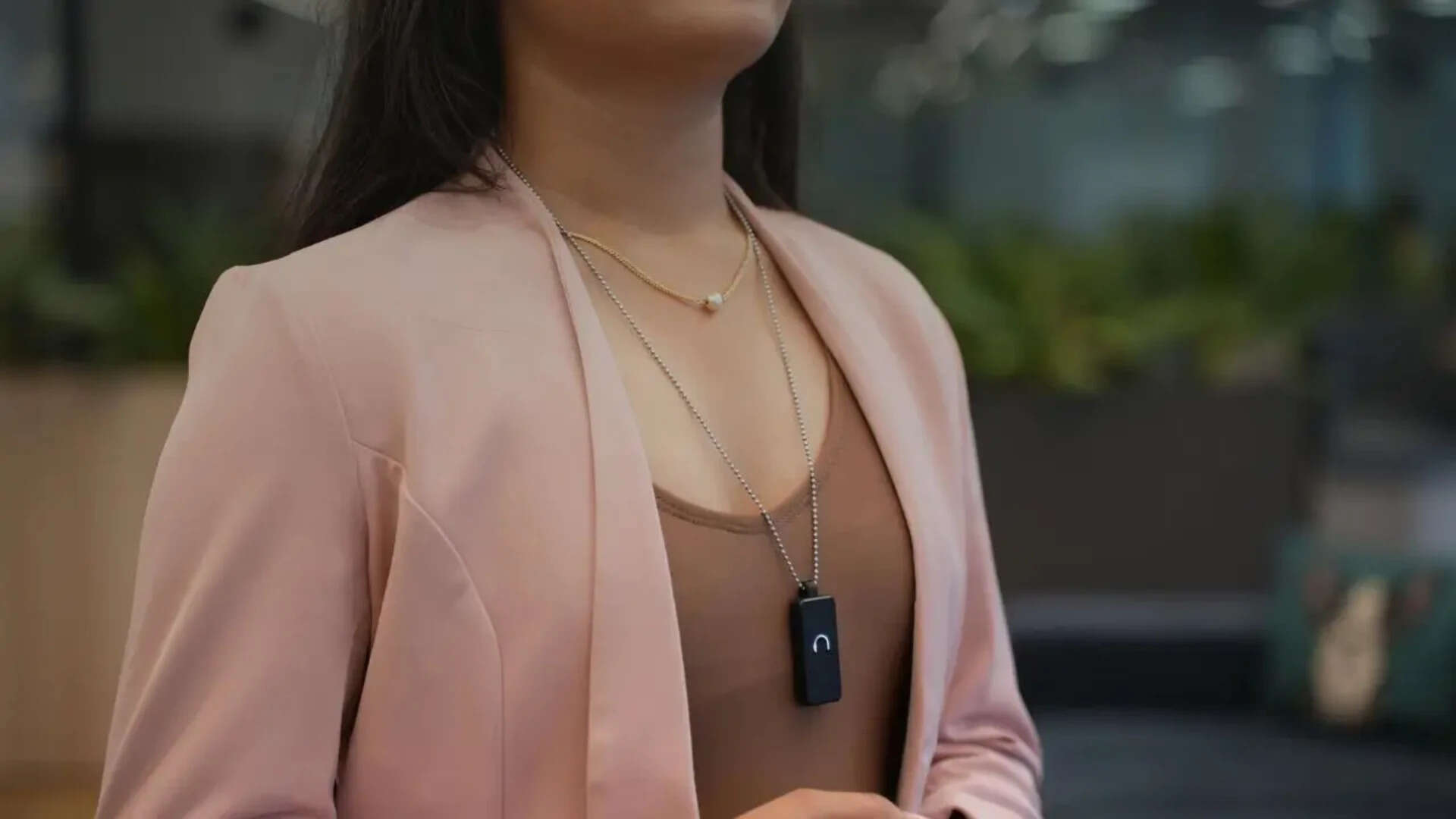
Brands like Neosapien and Luna Smart Ring are making AI disappear into acetate, gold and brushed metal. Screen-free trackers are in vogue.
Interest in smart glasses spiked in 2025A decade after early experiments faltered on price and clunky design, AI-enabled eyewear is finally having its moment. Global shipments rose 110% year-on-year in the first half of 2025, with AI-led models making up 78% of the category. The partnership between Meta Platforms and Ray-Ban has driven much of this surge, with sales jumping from 2 million units across 2023–24 to over 7 million last year. Production is now being scaled to 10 million units annually by 2026. Smart glasses are not plug-and-play devices. They require fittings, prescription lenses, and adjustments. Which means physical retail and scale. The Italian eyewear company EssilorLuxottica holds a clear edge here, with its global network and ties to houses like Prada, Armani and Chanel. Others are catching up. Google has invested $100 million in Gentle Monster, while ByteDance, Xiaomi and Huawei are pushing new products to market. In India, Lenskart is set to enter the space with AI-powered camera glasses that promise payments, translations and real-time recommendations. What has changed most is the design. Today’s smart glasses look like everyday frames. And that is the real breakthrough. In luxury, invisibility is power.Smart jewellery leads the market
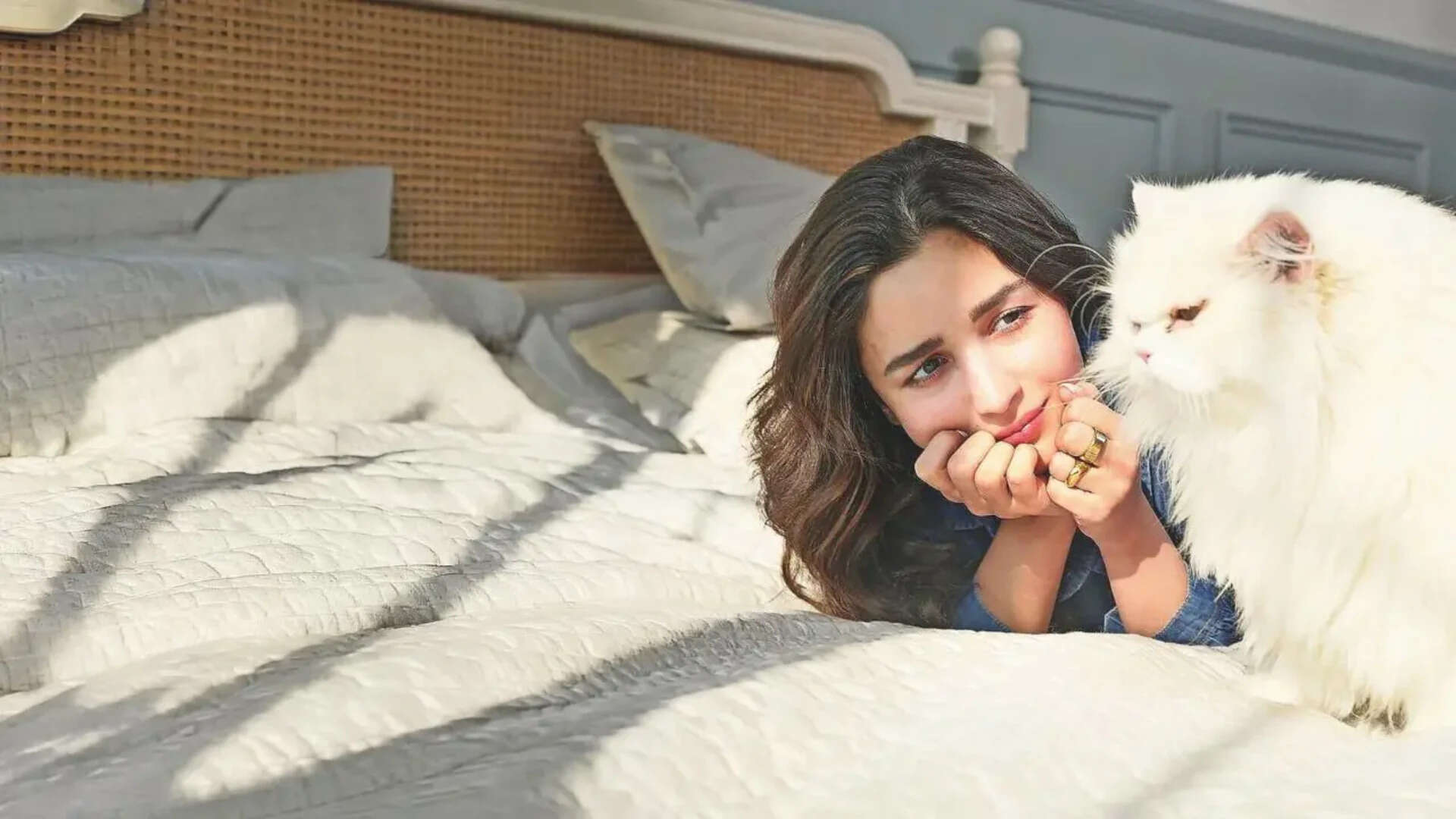
Alia Bhatt, a fitness device enthusiast, loves wearing an Oura ring because she thinks it’s been the most accurate to monitor her sleep.
The quietest devices are seeing the strongest growth. “Smart jewellery, especially rings and bands, is seeing strong adoption,” says a spokesperson for Luna. In luxury wearables, they add, “the science should work quietly in the background while the experience feels simple and effortless.” Smart rings have emerged as the stealth leaders of the category. Indian players such as Ultrahuman, Gabit and Aabo dominate much of the domestic market, while global brands like Samsung and Oura continue to expand. Oura has doubled its business annually for three years and sold over 5.5 million rings. The global smart ring market, valued at $417.5 million in 2025, is expected to cross $2 billion by 2033. For users, function and form go hand in hand. Stuti Bhageria, 37, matched her Oura ring to her wedding band. “I wear it for function, but it has to look good next to my jewellery,” she says.Wearables: The fastest-growing accessory categorySmart Watches: From 15% of the watch market in 2016, it now holds 35-40%. Brands like Tag Heuer, Tissot and Louis Vuitton have launched their own lines. (State of Fashion Report 2026)Smart Eyewear: Lower consumer prices are set to propel smart eyewear growth. Global shipments rose 110% year-on-year in the first half of 2025, with AI-enabled models representing 78% of shipments (up from 46% last year). Analysts expect sales to quadruple in 2026.EssilorLuxottica reported in February 2025 that Ray-Ban Meta sales had reached 2 million pairs and announced plans to increase production capacity to 10 million annual units by the end of 2026. (State of Fashion Report 2026)Smart rings, bracelets, pendants: According to Grand View Research, the global smart jewellery market size was estimated at $256.3 million in 2022 and is projected to reach $890.8 million by 2030, growing at a CAGR of 16.8% from 2023 to 2030.