Archaeologists unearthed a Roman military camp from the year zero in Frankfurt, challenging the traditional narrative of violent Roman expansion. Image Credit: Wikimedia Commons
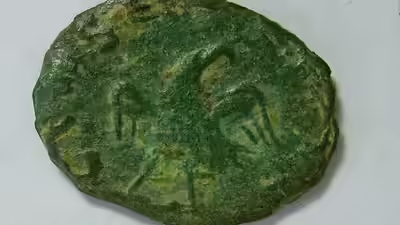
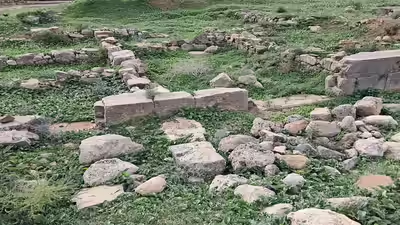
As archaeologists began to explore the luscious gardens of the Bolongaro Palace in Frankfurt, they were hoping to discover historic objects from the 17th century. They instead came across the greatest historical plot surprise: an expansive Roman military camp that dates from the year zero.The narrative about the Roman expansion to Germany has been an adrenaline-fueled story of blood. It’s like Gladiator is the Revenant. We’ve had a steady diet of tales about the bloody Battle of the Teutoburg Forest, as well as the ferocious battle of the Germanic tribes. However, this discovery in Hochst, the quiet neighborhood only five miles from downtown Frankfurt and a mere five miles from Frankfurt, has forced us to rethink the old beliefs.The pride of the world in ancient timesThe treasures that are being removed from the soil aren’t broken swords or damaged shields. Instead, archaeologists working for the Department of Archaeological Heritage Management find French as well as Belgian coins, as well as exquisite South Gallic ceramics. It is the absence of “strife and violence” is one of the most surprising aspects of the discovery. It indicates that when the Romans first arrived in the Frankfurt region, they were not in search of a fight. They were seeking neighbours.Andrea Hampel, head of the Monuments Authority, notes that the majority of us have “Asterix and Obelix” or images of war on our minds when we think about the Roman victory. However, the Bolongaro Garden tells a different tale, one of “contact and cooperation.” The existence of native ceramics along with Roman items suggests a shared way of life, with both soldiers and locals possibly trading currency, recipes and recipe books as opposed to blows.This notion of the concept of a “soft” Roman expansion is confirmed by the larger academic research on the period. Based on a study published by the authors Land of Marianna Olivadese as well as Maria Luisa Dindo (2024), the Pax Romana or “Roman Peace” was a multifaceted period of territorial expansion that frequently led to an edgy mixture of different cultures that merged during Roman rule. Though we usually concentrate on military power, the period was distinguished by cultural and architectural accomplishments that brought diverse cultures to create a common imperial identity.
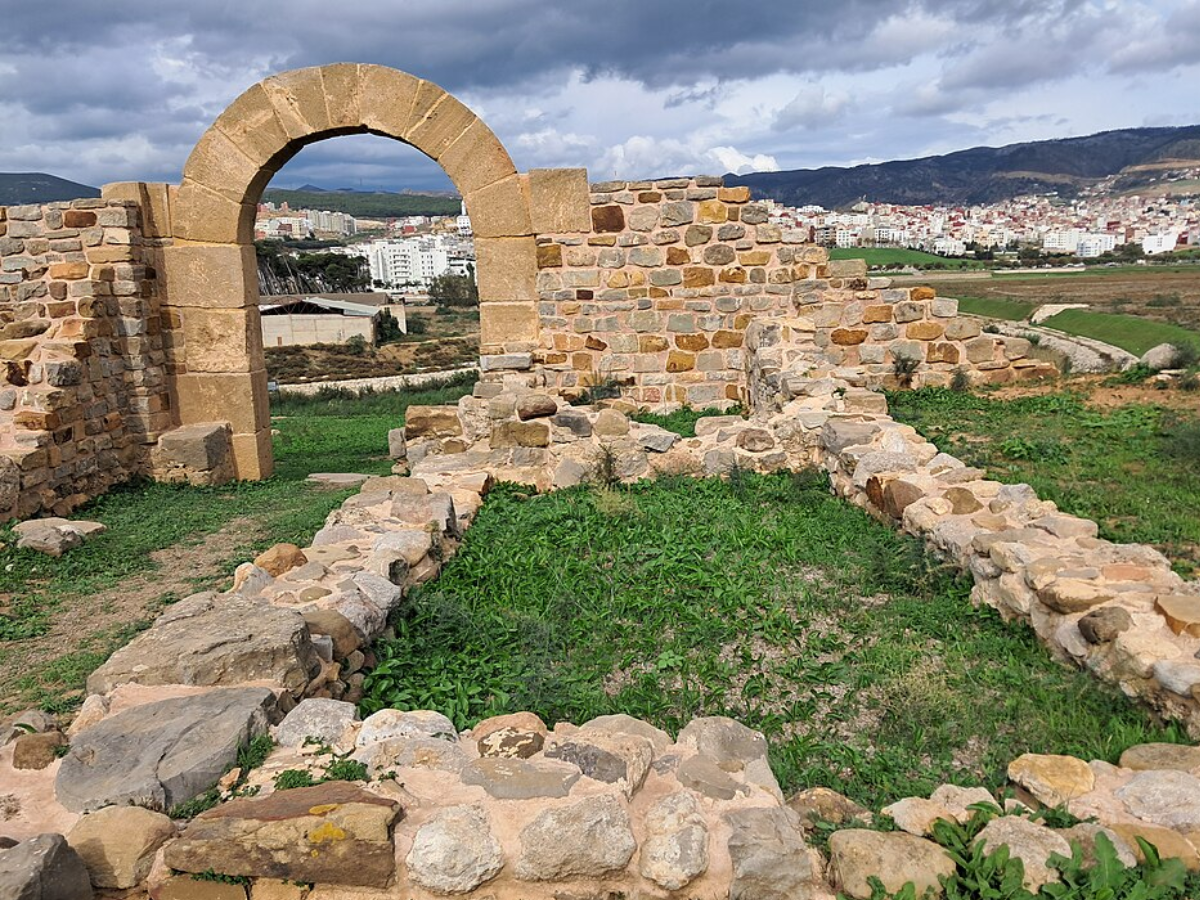
This discovery highlights a “soft” Roman expansion focused on integration and shared identity. Image Credit: Wikimedia Commons
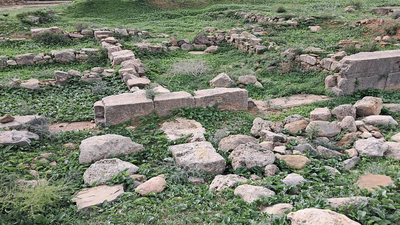
An ideal hangout near the riverMany Roman military camps in that time period were like a pop-up store, which was only temporary and left virtually nothing. Bolongaro is a different story. Bolongaro site differs. Its long-term viability is probably due to three elements: location, location and the location.Situated on an elevated location close to an elevated site near the Nidda and Main rivers, the camp was situated to watch the river and the nearby road network. The camp wasn’t just a barracks; it was also an important hub. It was a home for the elite Roman legionnaires and soldiers from the auxiliary units, and created a thriving and diverse population that stayed throughout the years.The degree of integration at this level is the main focus of contemporary archaeological theories. In a study published in the Theoretical Roman Archaeology Journal by Elizabeth Shaw (2022), the social and symbolic significance of Roman objects is often defined by the context in which they were placed, as well as the way they were used and by whom the owners were that they belonged to. Finding everyday objects within Frankfurt instead of simply military equipment confirms the notion that these camps served as spaces of community that were places where Roman and local identities started to converge (Shaw 2022).The need to rethink”Frankfurter” as a story “, Frankfurter” origin storyFrankfurt City Mayor Mike Josef recently called the discovery The find was a “piece of history of the city itself.” It’s a reminder that the city’s roots came from moments of awe, rather than battle. The “Frankfurters” of the year zero may be attracted by the new shiny coins of Gaul or the glitzy ceramics rather than starting the war.The modern US people, who are fascinated by ancestry as well as “how it started” videos, this discovery represents an interesting shift in the vibe. It shows that two thousand years ago, the process of globalisation took place in some odd areas. This Bolongaro Palace renovation may have been conceived as a means to improve the condition of an older museum, and gave us an insight into the time that two totally different cultures came together to be friends.