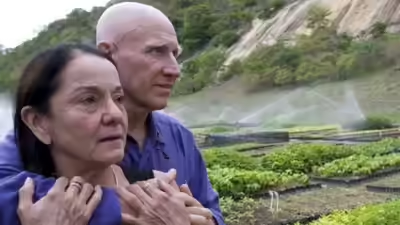
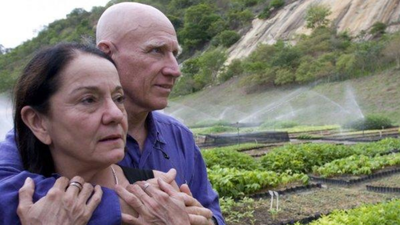
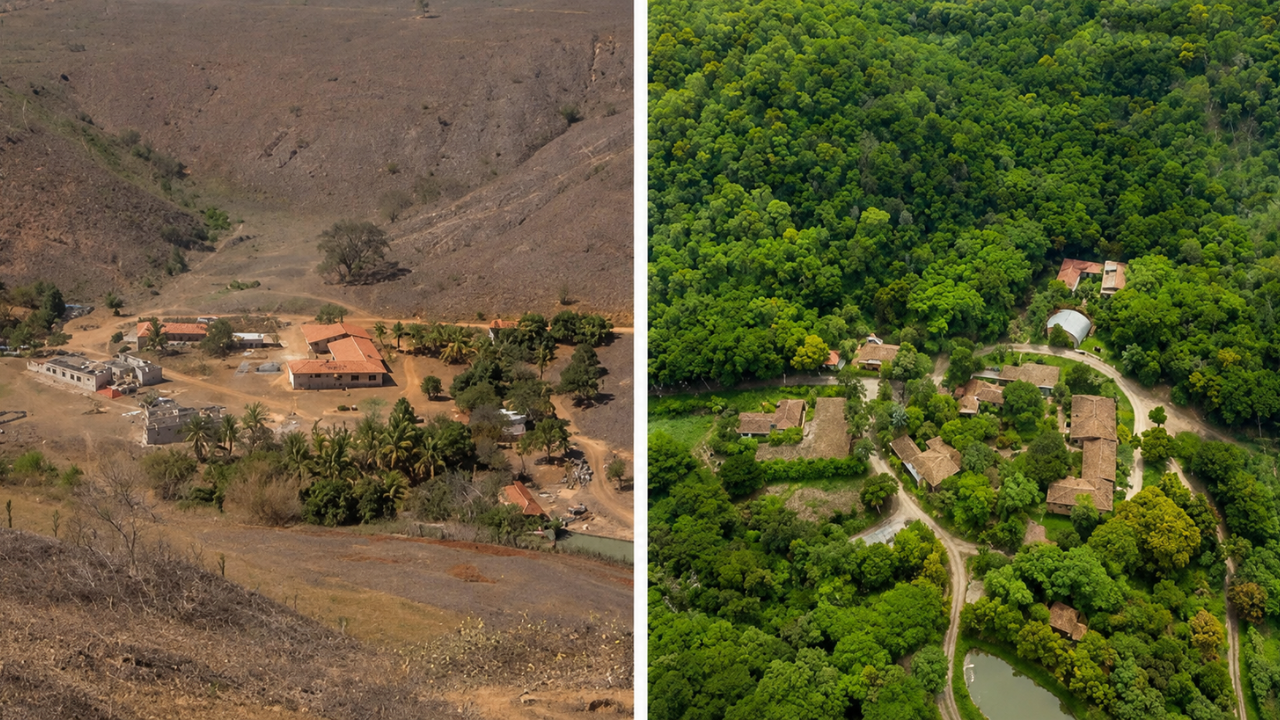
When Brazilian photographer Sebastiao Salgado returned to his family land in Brazil during the 1990s, he reportedly found a devastated landscape instead of the lush forest he remembered from childhood. Years of deforestation, cattle grazing and soil degradation had stripped the land of wildlife, water and greenery. Rivers had dried up and much of the ecosystem appeared close to collapse. But rather than abandon the land, Salgado and his wife Lelia Wanick Salgado began one of the world’s most remarkable reforestation efforts. Over the next two decades, the couple helped plant more than 2 million trees and transformed the barren region into a thriving tropical forest once again.
How a couple planted 2 million trees to bring back a forest
The project began after Sebastiao Salgado returned home following years spent documenting wars, famine and humanitarian crises around the world through photography. According to interviews, the emotional toll of witnessing global suffering had left him deeply exhausted.When he arrived back at his family ranch in the Brazilian state of Minas Gerais, he reportedly expected to reconnect with the rich Atlantic Forest ecosystem that once covered the region. Instead, most of the land had become dry, degraded and nearly lifeless.It was Lelia Wanick Salgado who proposed the idea of restoring the forest completely. Though the task initially seemed impossible, the couple decided to begin a long-term environmental recovery project focused on native ecosystems rather than commercial forestry.In 1998, the couple founded Instituto Terra, a non-profit organisation dedicated to ecological restoration, environmental education and sustainable land recovery.The organisation began collecting native seeds, building nurseries and researching how to restore the damaged Atlantic Forest biome. Rather than planting fast-growing commercial species, the project focused on restoring the natural biodiversity of the region.Scientists and environmental workers involved in the project carefully selected native tree species capable of rebuilding soil quality, restoring water systems and supporting wildlife habitats.Over roughly 20 years, Instituto Terra helped plant more than 2 million native trees across hundreds of hectares of degraded land.The restoration included a wide variety of species originally found in Brazil’s Atlantic Forest ecosystem. This diversity was important because forests rely on complex ecological interactions between plants, insects, birds, fungi and animals.As the trees matured, the environment gradually began repairing itself. Roots stabilised the soil, leaf cover reduced surface temperatures and water retention improved significantly.Over time, the once-barren landscape slowly transformed back into a functioning tropical forest ecosystem.
Wildlife and rivers returned to the region
One of the most remarkable outcomes of the project was the return of wildlife. As vegetation recovered, many animal species reportedly reappeared in the region after years of absence.Environmental reports connected to the project documented the return of birds, mammals, reptiles and insects as biodiversity increased across the restored forest.The regeneration also improved local water systems. Springs and streams that had weakened or dried up reportedly began flowing again as the forest recovered its ability to retain moisture and regulate the local climate.Researchers say healthy forests play a major role in maintaining rainfall patterns, groundwater systems and temperature balance.
Why the Atlantic Forest is globally important
The Atlantic Forest, also known as Mata Atlantica, is one of the most biodiverse ecosystems in the world. It once stretched across large portions of Brazil’s coastline and inland regions.However, centuries of logging, agriculture, mining and urban expansion destroyed most of the original forest cover. Scientists estimate that only a small fraction of the Atlantic Forest still survives today.Despite the destruction, the region remains home to thousands of plant species and many rare animals found nowhere else on Earth. Because of this, restoration projects like Instituto Terra are considered internationally important for conservation and climate resilience.
Sebastiao Salgado’s transformation from photographer to environmentalist
Before beginning the reforestation project, Sebastiao Salgado was already internationally recognised for his black-and-white documentary photography.He became famous for documenting migration, labour, famine, war and indigenous communities across multiple continents. His work often focused on human suffering and social inequality.Many observers believe the restoration project became both an environmental mission and a personal healing journey for Salgado after decades spent photographing global crises.The recovery of the forest later influenced his photography project “Genesis,” which focused on untouched landscapes, wildlife and traditional cultures around the world.
The science behind restoring forests
Ecological restoration involves far more than simply planting trees. Forest ecosystems depend on interactions between soil organisms, fungi, insects, water systems and wildlife.When native species are reintroduced carefully, forests can gradually recover many of their natural processes. Trees improve soil fertility, create shade, store carbon dioxide and provide habitats for animals that help spread seeds and maintain biodiversity.Over time, these ecological relationships help create a self-sustaining cycle of regeneration.Scientists increasingly view reforestation and ecosystem restoration as important tools for addressing climate change, biodiversity loss and water insecurity.
Why the story inspired people worldwide
The story of Sebastiao and Lelia Salgado gained international attention because it demonstrated that even severely damaged ecosystems can recover through long-term restoration efforts.Many people were inspired not only by the scale of the project but also by the patience involved. The transformation took decades rather than months, requiring continuous work, ecological planning and commitment.The project also challenged the belief that environmental destruction is always irreversible. Instead, it became a powerful example of how biodiversity and natural systems can recover when given enough protection and time.
A lasting environmental legacy
Today, Instituto Terra continues its restoration and environmental education work in Brazil. The organisation trains students, supports conservation projects and promotes sustainable land management practices.The forest regrown by the Salgados now stands as one of the world’s most famous examples of ecological restoration led by private individuals.Their work has become a symbol of environmental resilience and has shown that restoring nature is possible even after decades of destruction.