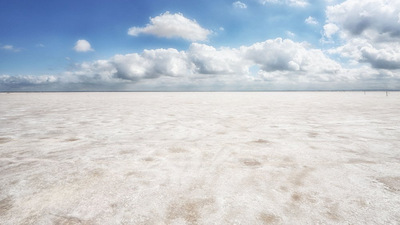
At first glance, the enormous white plains stretching across northern Oklahoma look almost otherworldly, resembling a frozen lake or snow-covered desert under the blazing sun. But hidden just beneath the salty surface of the Great Salt Plains lies one of the rarest geological treasures in the world: hourglass selenite crystals. Found naturally only in this part of Oklahoma, the unusual crystals have fascinated scientists, tourists, and amateur treasure hunters for decades. Even more surprisingly, visitors are legally allowed to dig for the crystals themselves in designated public areas, turning the remote salt flats into one of America’s most unusual hidden attractions.
Oklahoma’s white salt flats are the only known source of hourglass selenite crystals
The Great Salt Plains are famous for producing a rare form of gypsum crystal known as hourglass selenite. These transparent crystals contain dark hourglass-shaped patterns trapped inside them, created by tiny particles of sand and clay during their formation.What makes them remarkable is their rarity. According to geologists and the United States Fish and Wildlife Service, the distinctive hourglass pattern forms naturally only in this specific region of Oklahoma.The crystals vary in size from tiny fragments to specimens several inches long. Most have a diamond-like shape and a glassy appearance that makes them especially striking when cleaned and exposed to sunlight.Millions of years ago, much of this region was covered by ancient inland seas. As the water repeatedly evaporated, thick mineral deposits accumulated beneath the ground.Over time, groundwater dissolved gypsum deposits underground and later redeposited the minerals as crystals within layers of muddy sediment. Tiny particles of red clay and sand became trapped inside the growing crystals, eventually creating the distinctive hourglass shape visible today.Scientists believe the crystals formed because of a highly unusual combination of saline groundwater, gypsum-rich deposits, clay sediments, and constantly changing water levels. Together, these conditions created a geological environment unlike almost anywhere else on Earth.
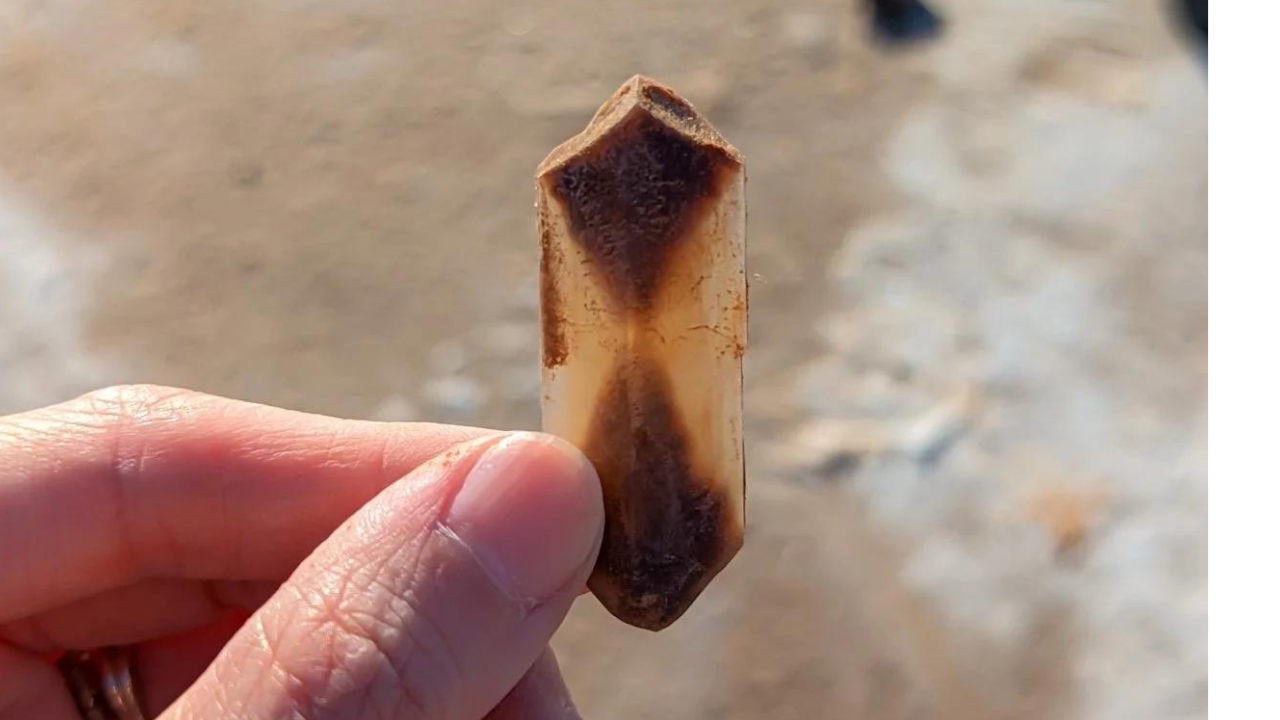
Hourglass selenite.
Visitors can dig for the crystals for free
One of the most unusual aspects of the Great Salt Plains is that the public is allowed to search for crystals themselves.Inside the Salt Plains National Wildlife Refuge, designated digging zones are open seasonally to visitors. Families, tourists, geology enthusiasts, and photographers regularly arrive carrying buckets, shovels, and hand tools in search of buried crystals.Digging is generally permitted between April and October, depending on weather and refuge conditions. Visitors must remain within approved public digging areas and are only allowed to use hand tools. Commercial collecting is prohibited, and daily collection limits are enforced to help preserve the site.Because many crystals lie only a few inches beneath the muddy surface, even first-time visitors often manage to uncover specimens relatively quickly.
The strange landscape of Oklahoma’s salt desert
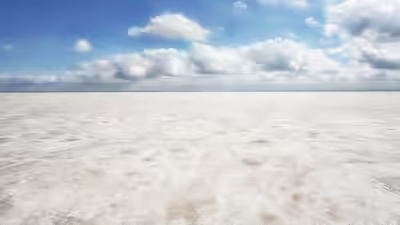
The landscape itself is almost as unusual as the crystals hidden beneath it. Large sections of the flats are covered in bright white salt deposits that can stretch for miles, giving the region an appearance more commonly associated with deserts in Bolivia or Utah.During hot weather, the reflective surface creates intense glare and shimmering mirage effects. After rainfall, shallow pools of water can transform parts of the plains into giant reflective mirrors.The area also supports important wildlife habitats. The refuge serves as a major migratory stop for birds travelling across North America, including pelicans, cranes, ducks, geese, and shorebirds.
A hidden geological wonder gaining online attention
The Great Salt Plains recently gained fresh attention online after a viral social media thread highlighted the rare crystals and the fact that people can legally dig them up for free.The discussion quickly expanded into a broader conversation about overlooked natural wonders across the United States, with users sharing little-known geological sites from their own states.Despite its scientific significance, the Oklahoma site remains relatively unknown compared with more famous American natural landmarks. Yet for visitors willing to travel into the vast white landscape, the experience offers something rare: the chance to uncover a crystal formation that exists nowhere else on Earth.
Why the Great Salt Plains continue to fascinate scientists and tourists
Part of the fascination comes from the combination of rarity and accessibility. Many unique mineral formations are hidden deep underground or protected from public access, but Oklahoma’s hourglass selenite crystals can still be discovered by ordinary visitors using simple hand tools.The site also combines geology, history, wildlife, and tourism into a single landscape that feels both scientifically important and visually surreal. Beneath the blazing sun and layers of white salt, the Great Salt Plains continue hiding one of the planet’s strangest natural treasures just inches below the surface.