

There was a time when small wins felt big. A message from a friend, a weekend plan, even a good meal could lift the mood. Now, for many people, those same moments barely register. The excitement feels muted, almost like life is being watched through a slightly fogged glass.This shift is often brushed off as stress or “just growing up.” But there is a deeper pattern emerging, one that scientists are beginning to talk about more seriously: dopamine burnout. It is not a formal medical diagnosis, yet the experience is very real. And it says a lot about how modern life is shaping the brain.
What is dopamine burnout, really?
Dopamine is often called the “feel-good chemical,” but that label misses the point. It is less about pleasure and more about motivation and anticipation. It pushes a person to seek, explore, and repeat actions that once felt rewarding.Dopamine burnout is a loose term used to describe a state where the brain becomes less responsive to these rewards. The system is not broken, but it is overwhelmed. When stimulation becomes constant, the brain adapts by dulling its response.A useful way to think about it: if everything is exciting all the time, nothing truly feels exciting anymore.
Why nothing feels exciting anymore
This is not about laziness or lack of gratitude. The environment has changed faster than the brain can adapt.Here are a few forces quietly shaping this shift:1. Endless digital stimulationShort videos, constant notifications, quick rewards. Each scroll delivers a tiny spike of novelty. Over time, the brain expects that level of stimulation as the baseline.2. Reward without effortEarlier, effort and reward were closely linked. Today, entertainment, food, and validation are available instantly. The brain loses the sense of “earning” pleasure.3. Chronic stress and fatigueStress hormones interfere with dopamine signalling. When the body is tired, the brain prioritises survival, not excitement.4. Comparison cultureConstant exposure to curated lives can make ordinary moments feel inadequate. Even genuine joy gets filtered through comparison.
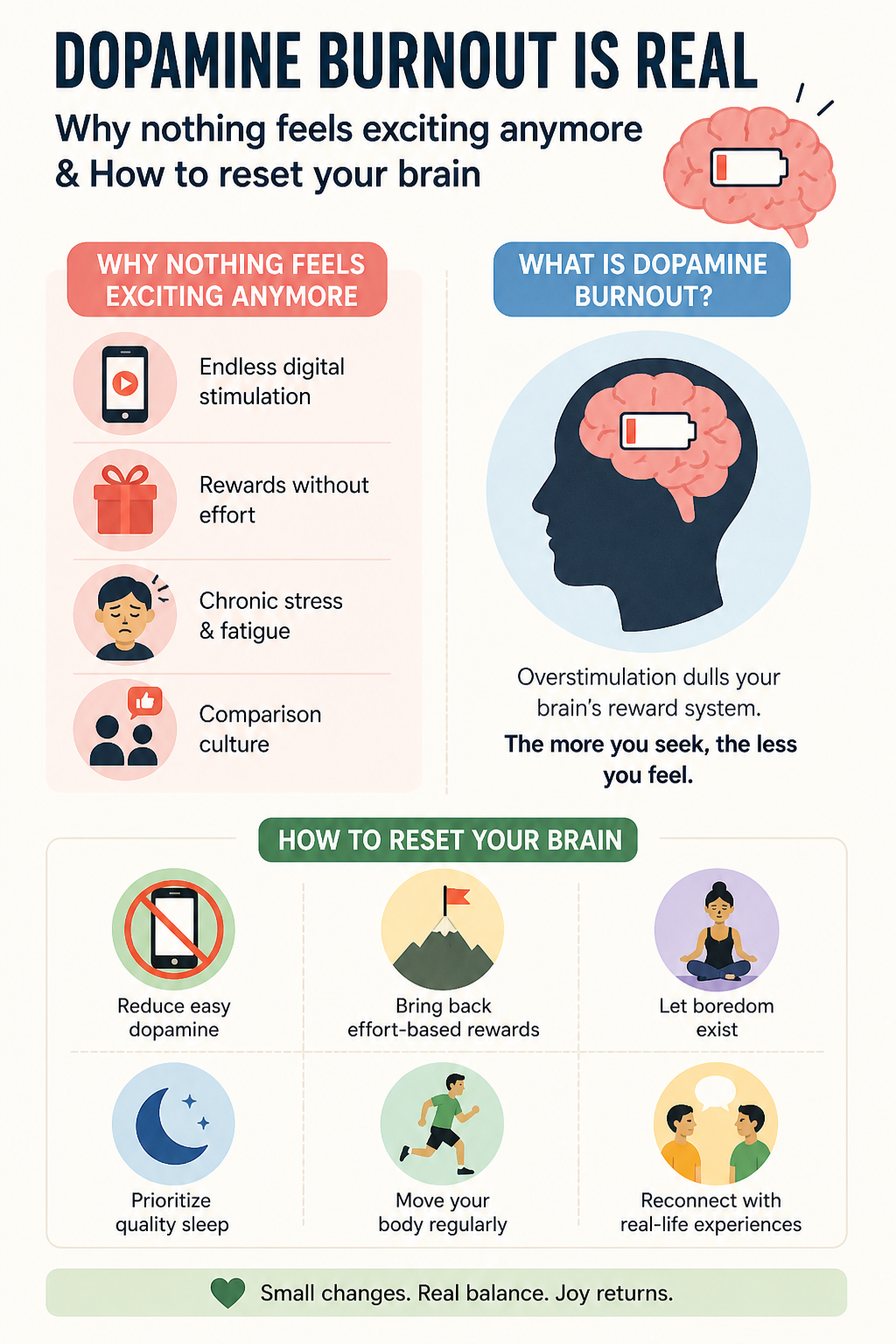
The way forward is not extreme detox, but gradual recalibration through effort-based activities, better sleep, reduced overstimulation, and real-world engagement. The brain can recover its sense of joy, but it needs space to do so.
The signs of dopamine burnout
The signs are subtle at first, then slowly become harder to ignore.
- Things once enjoyed now feel flat
- Motivation drops, even for simple tasks
- Constant need for distraction
- Difficulty focusing on long activities
- A strange mix of boredom and restlessness
This is not depression in every case, but it can overlap. That is why it is important to notice the pattern early rather than dismiss it.
How to reset the brain (without extreme fixes)
The idea is not to eliminate pleasure, but to restore balance. The brain is adaptable, and small changes can help it recalibrate.1. Reduce “easy dopamine” for a whileCut down on high-frequency stimulation like endless scrolling or binge-watching. Even a few hours a day can make a difference.2. Bring back effort-based rewardsActivities like walking, cooking, reading, or learning something new rebuild the effort-reward link. They may feel slow at first, but that is part of the reset.3. Let boredom existIt sounds counterintuitive, but boredom helps the brain recover sensitivity. It creates space for natural curiosity to return.4. Improve sleep qualitySleep directly affects dopamine regulation. Consistent sleep timing matters more than just total hours.The Centers for Disease Control and Prevention (CDC) notes how sleep deprivation impacts brain function and emotional regulation.5. Move the body regularlyPhysical activity increases dopamine in a steady, healthy way. Even a 20-minute walk can help reset mood patterns over time.6. Reconnect with real-life experiencesFace-to-face conversations, time in nature, and unstructured time with loved ones bring a different kind of satisfaction. It is quieter, but more lasting.
A different way to think about happiness
Modern life often pushes the idea that happiness should feel intense and constant. But the brain was never designed for that.What if the goal is not constant excitement, but steady engagement?The truth is, joy often returns slowly. It shows up in small ways first. A conversation that feels warm. A moment of focus that lasts longer than before. A sense of calm that was missing.That is not a downgrade. It is a reset.Disclaimer: This article is for general awareness and does not replace professional medical advice. If persistent low mood, lack of motivation, or emotional numbness continues, it is important to consult a qualified mental health professional.